-

High returns from intercropping mushroom cultivation in citrus orchards
The author succeeded in growing mushrooms between the rows of a densely-canopied citrus orchard, achieving a double harvest of both citrus and mushrooms. Large-scale promotion has shown that generally each mu of orchard produces more than 3000 kg of citrus per year, worth 4000 yuan; and 800 kg of fresh mushrooms, worth 3200 yuan. After deducting production costs of 1500 yuan, the total net income is more than 5700 yuan, which is more than 2000 yuan higher than growing citrus alone. Intercropping mushrooms in the orchard also helps to increase humidity, retain warmth and improve the soil. 1 Raw material preparation Each mu requires 1500 kg of dry wheat straw (rice straw or sawdust may also be used), 20 kg of lime and 15 kg of urea
-
How to intercrop mushrooms and ginger year-round in a citrus orchard
Trees such as mandarin oranges and pomelos are tall and large, and the orchard is generally fairly open yet shaded. To increase orchard income, the author conducted a year-round intercropping trial of mushrooms and ginger in a pomelo orchard about 30 years old with a spacing of 5 m × 5 m. Starting in the autumn of 1989 (September), white mushrooms were planted between the rows, with a planting area of about 44 sq m. By calculation, the investment was about 400 yuan, and the net income from the autumn mushrooms and spring mushrooms reached more than 500 yuan. After the spring mushrooms were harvested in April 1990, the mushroom substrate was turned and buried into the soil, in preparation for planting ginger.
-
Detailed Guide to Intercropping Oyster Mushrooms in Rice Fields
During the growth and development of rice, intercropping oyster mushrooms using the spaces between rice rows and the special conditions under the shade of rice clumps can provide suitable temperature and humidity conditions for the growth of oyster mushrooms (large temperature difference between day and night, good shading, sufficient scattered light, etc.), enabling high yields of oyster mushrooms, filling the market off-season when few mushrooms are available in summer, enriching summer vegetable varieties, and increasing rice farmers' income. I. Crop rotation arrangement and field plot design: Rice varieties should be selected with strong lodging resistance, tall plants, thick stalks, and resistance to rice planthoppers. Sowing in late May, transplanting in late June, with a density where
-
Cultivation Techniques for Shiitake Mushrooms Intercropped in Fast-Growing Plantations in Beijing
In order to protect and improve the ecological environment of the capital, artificial fast-growing plantations in the suburbs of Beijing have developed rapidly in recent years. Because the time required to grow timber is relatively long, there is a contradiction between farmers' short-term benefits and the long-term benefits of afforestation, which has affected farmers' enthusiasm for planting trees and establishing forests. Therefore, effectively using idle land resources between the trees to develop edible mushroom production is an effective way to accelerate the prosperity of afforestation farmers. Taking shiitake mushrooms as an example, this paper introduces cultivation techniques for intercropping edible mushrooms in fast-growing plantations. 1 Selection of cultivation site The fruiting body development stage of shiitake mushrooms intercropped in woodland occurs in the forest, and moderate scattered light is
-
Grain-mushroom intercropping planting model boosts yield and income
Corn-oyster mushroom intercropping uses a 2:1 intercropping cultivation form, improving field ventilation and light penetration; the oyster mushroom production requires more watering, which is very beneficial to corn growth. The spent mushroom substrate still contains relatively rich organic nutrients and can be turned into the soil as high-quality farmyard manure to build soil fertility. Intercropped corn can be sown in late April; on the basis of early-spring plowing and harrowing, spread farmyard manure, form ridges 60 cm wide, with plant spacing smaller than that of pure corn stands, and add the corn plants from the mushroom rows to the rows on both sides respectively, ensuring
-
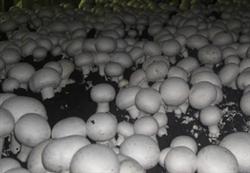
Cultivation Techniques for Intercropping Button Mushrooms in Winter-Warm Greenhouses with Cucumbers
To increase greenhouse income, we used the temperature and humidity conditions and limited space inside the greenhouse to carry out a three-dimensional planting trial of vegetables and button mushrooms. From October 1996 to May 1997, in a 420 sq m greenhouse, without affecting vegetable cultivation, we grew 200 sq m of button mushrooms, producing 2080 kg of button mushrooms, ...
-
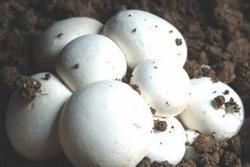
Key Management Techniques for Intercropping Cucumber with Button Mushrooms
Strictly control the temperature inside the shed. During fruiting, the daytime air temperature inside the shed should be kept at 20°C-30°C, and at night above 10°C. On cloudy days when light is insufficient and the shed temperature is low, use electric lights at night to appropriately supplement light and raise the temperature, installing one 100-watt bulb every 6 m. Because button mushrooms are cultivated on the ground and are mainly affected by ground temperature, the shed...
-
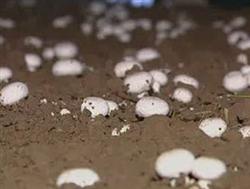
Solar Greenhouse Cultivation Technique for Intercropping Cucumber with Agaricus bisporus
I. Composting Technique. For 100 sq m, you need 1500 kg of wheat straw, 1250 kg of cow manure, 40 kg of phosphate fertilizer, 40 kg of gypsum, and 50 kg of lime with a pH of 7.5-8. 1. Pre-wetting the wheat straw: Take the wheat straw according to the formula, soak it in water in batches, and once the wheat straw has evenly absorbed water, pile it in layers on one side of the composting yard. 2. Wheat straw...
-
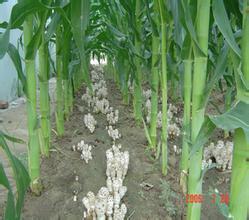
Key Technical Points for Intercropping Shaggy Mane Mushrooms in Pepper Fields
Intercropping shaggy mane mushrooms (Coprinus comatus) in pepper fields is a good way to cultivate them in a semi-wild manner. It can save the expense of building mushroom houses, does not take up extra space, and can greatly increase the economic benefit per unit of land area. Generally, after the peppers are planted, trenches are dug in the middle of the pepper rows, material is laid, and mushroom spawn is scattered. For the convenience of managing and harvesting the mushrooms...
-
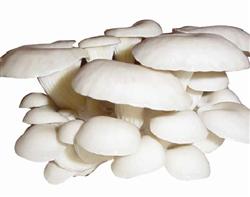
Key Cultivation Techniques for Intercropping Oyster Mushrooms with Cotton
Oyster mushrooms can be cultivated all year round, but those grown in the high-temperature season yield the greatest profit. Reasons: First, summer temperatures are high, making cultivation technically difficult, and pests and diseases occur easily, often leading to cultivation failure. Second, the total area under oyster mushroom cultivation in summer decreases, and total output is low, causing a shortage of fresh oyster mushrooms on the market and driving prices up. Base...
条件筛选