-
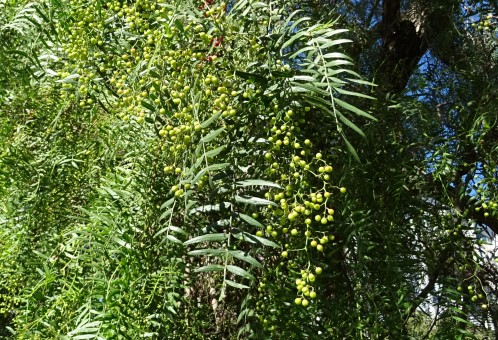
What crops are suitable for intercropping under prickly ash trees?
Prickly ash, also known as dajiao, Qin pepper, and Shu pepper, is a common plant in China. It is widely cultivated because it can be used both as a seasoning and as a traditional Chinese medicine. However, since young prickly ash trees are not easy to establish successfully, farmers adopt intercropping patterns to enhance soil fertility.
-

Key Techniques for Intercropping Sweet Potato with Sesame
Sweet potato is a vining crop with a low light-receiving position. When intercropped with sesame, which has a high light-receiving position, it forms a well-layered crop community, thereby improving light energy utilization. Generally, without reducing sweet potato yield, it increases sesame seed income by 30-40 kg per mu. This planting method is suitable for all sesame-producing regions. 1. Planting methods (1) Sweet potato is cultivated with plastic film mulching. When preparing the land, form ridges with a height of 10-12 cm, a top width of 60 cm, a bottom width of 80 cm, and a ridge spacing of 40 cm. Sweet potato seedlings are raised 7-10 days earlier than usual according to conventional practice.
-
Key Techniques for High-Efficiency Cultivation of Soybean Intercropped with Melon
Soybean intercropped with melon at a 4:2 ratio, with Chinese cabbage replanted as the following crop after melon harvest, achieves three harvests from one field and an income of more than 15,000 yuan per hectare, making it a new high-yield and high-efficiency planting model. 1. Selecting new varieties 1.1 For the soybean variety, select Jinta soybean, which has strong branching and super-high yield. Jinta soybean has 6 outstanding characteristics: 1) Strong growth vigor. Jinta soybean has a plant height of 70-80 cm, thick and sturdy stems, and high resistance to lodging; 2) Strong branching ability. A single plant has 8-10 branches, with a maximum of 16 branches. The branches grow upward, and the plant takes on a fan shape without breaking branches, overcoming the tendency of strongly branching soybeans to break branches, resulting in an ideal plant type; 3) Dense pod setting. A single plant sets 200-250 pods, with a maximum of 400 pods. The pods are so dense that the stems are hidden, 2-3 times that of other soybeans. Most pods are 3-seeded, with a yield of 75-100 g per plant and a maximum of 400 g; 4) Excellent quality. The beans are golden yellow, large and uniform, with a 100-seed weight of 22-25 g and high oil and protein content; 5) Strong stress resistance. The growth period is 120 days and requires an effective accumulated temperature of 2450°C. It is drought-resistant, moisture-tolerant, and salt-alkali tolerant, and prefers fertilizer and water. It is suitable for planting in Jilin, Liaoning, Heilongjiang, and Inner Mongolia in areas with an effective accumulated temperature above 2450°C; 6) High and stable yield. The yield per hectare is 4000-5000 kg, making it a high-yielding, high-quality soybean variety.
-
Field management of wheat-intercropped cotton must be followed up in time
1. Growth and development characteristics of wheat-intercropped cotton. For wheat-intercropped cotton, the cotton seedlings are weak after wheat harvest, grow and develop slowly, bud and flower late, are prone to excessive vegetative growth in the mid-season, and tend to mature late in the late season; moreover, this year the cotton seedling stage was affected by rainfall and low temperatures, and seedling diseases were relatively severe. Field management after wheat harvest must be based on the word "early" and vigorously grasp the word "quick" to promote rapid growth and development of the cotton seedlings so as to make up for insufficient growth during the seedling stage. 2. Quickly destroy the wheat stubble and loosen the soil
-
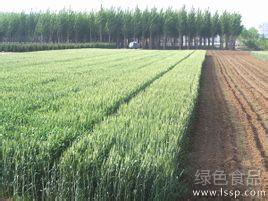
What are the technical characteristics of wheat field intercropping and multiple cropping patterns?
Analysis of the technical characteristics of the "intercropping and multiple cropping" pattern in wheat fields
-
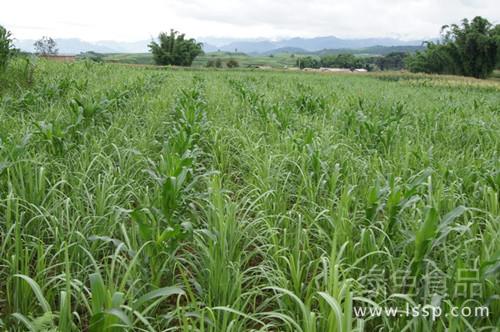
Key technical points for intercropping sugarcane with corn: improving land, moisture and light use efficiency
Improving land, moisture and light use efficiency: key technical points for intercropping sugarcane with corn
-
Improving the Multiple Cropping Index and Increasing Fertilizer Application: Intercropping Techniques for Peanuts and Sugarcane
Improving the Multiple Cropping Index and Increasing Fertilizer Application: Intercropping Techniques for Peanuts and Sugarcane
-

Bamboo fungus intercropped in bamboo forests: cultivation techniques, great nutrition and high market returns
Bamboo fungus has great nutrition and high market returns: cultivation techniques for intercropping bamboo fungus in bamboo forests
条件筛选