Key Winter Management Techniques for Intercropping Welsh Onions in Wheat Fields
In early autumn the weather turns cool and the onions begin vigorous growth, but the temperature is still relatively high and the plants grow slowly. Their water demand is not high, so they should be watered sparingly. Watering should be done in the morning and evening; never water at noon, as this suddenly lowers the soil temperature and affects root growth. In late August, when the average temperature in North China is below 24°C, Welsh onions...
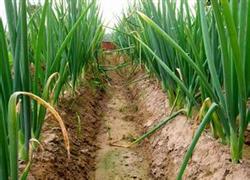 The area of Welsh onions intercropped with wheat in Zhangqiu City is relatively large. These wheat fields are generally sown at a relatively high rate and irrigated in a timely manner, so the soil moisture is generally better than in other wheat fields. For the management of these wheat fields, pay attention to the following points:
First, adapt measures to local conditions. For wheat fields where Welsh onions are harvested after autumn, rake promptly and rake out the buried wheat seedlings in time. For wheat fields where the Welsh onions have not been harvested, prevent excessive growth of the wheat seedlings so as to avoid greater damage to the wheat seedlings when the Welsh onions are harvested later.
Second, strengthen monitoring and control pests and diseases in time. At present, wheat fields in our city have entered an important period when various pests and diseases cause winter infection, so scientific control should be carried out according to actual conditions and local conditions. Prepare poisoned soil or poisoned bait to control underground pests and ensure a full stand overwinters. For wheat stripe rust, adhere to the strategy of "scout with medicine, treat on the spot, control a whole area when a single spot is found" to minimize overwintering inoculum sources. For fields where sheath blight reaches the threshold, carry out control, and conduct general spray control in early spring next year to reduce the disease base in the middle and late stages. Actively carry out integrated control of wheat pests and diseases to ensure control effectiveness.
Third, chemical weeding. Since wheat sowing this year, soil moisture has been suitable and temperatures have been relatively high, so the emergence rate of weeds before winter is higher than in previous years. At present, the weeds are young, have low resistance to herbicides, the wheat seedlings are small, and the shading degree is low, making it easy to spray herbicides for weeding. In addition, the pre-winter application safety interval is long, the control effect is good, and it is not easy to cause herbicide damage. This is a favorable opportunity to choose the right pesticide and carry out chemical weeding. The application time should be when the daily average temperature is not lower than 5°C. Use pesticides reasonably according to the occurrence of weeds. For wheat fields with severe broadleaf weed infestation dominated by catchweed bedstraw, Descurainia sophia, chickweed, wild rape, shepherd's purse, and the like, Juxing or Maimai can be used for control; for wheat fields with severe monocotyledonous weed infestation dominated by shortawn foxtail, wild oat, and the like, Puma or oat-kill, etc., can be used for control.