-
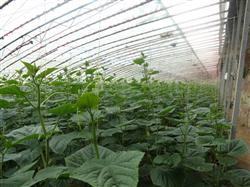
Detailed Explanation of Spring Cauliflower and Pumpkin Intercropping Cultivation Techniques
In spring, when it is time to train the pumpkins grown in arch sheds onto trellises, many vegetable growers choose single-line trellising. Single-line trellising simply means hanging the two vines of the pumpkin side by side, which makes trellising faster. However, because pumpkin leaves are relatively large, the vines already look crowded as soon as the fruit begins to set, which is unfavorable for pumpkin coloration. Vegetable growers in Jitai Town, Shouguang City, Shandong Province...
-
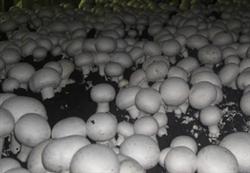
Cultivation Techniques for Intercropping Button Mushrooms in Winter-Warm Greenhouses with Cucumbers
To increase greenhouse income, we used the temperature and humidity conditions and limited space inside the greenhouse to carry out a three-dimensional planting trial of vegetables and button mushrooms. From October 1996 to May 1997, in a 420 sq m greenhouse, without affecting vegetable cultivation, we grew 200 sq m of button mushrooms, producing 2080 kg of button mushrooms, ...
-
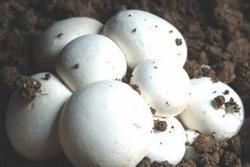
Key Management Techniques for Intercropping Cucumber with Button Mushrooms
Strictly control the temperature inside the shed. During fruiting, the daytime air temperature inside the shed should be kept at 20°C-30°C, and at night above 10°C. On cloudy days when light is insufficient and the shed temperature is low, use electric lights at night to appropriately supplement light and raise the temperature, installing one 100-watt bulb every 6 m. Because button mushrooms are cultivated on the ground and are mainly affected by ground temperature, the shed...
-
Solar Greenhouse Cultivation Technique for Intercropping Cucumber with Agaricus bisporus
I. Composting Technique. For 100 sq m, you need 1500 kg of wheat straw, 1250 kg of cow manure, 40 kg of phosphate fertilizer, 40 kg of gypsum, and 50 kg of lime with a pH of 7.5-8. 1. Pre-wetting the wheat straw: Take the wheat straw according to the formula, soak it in water in batches, and once the wheat straw has evenly absorbed water, pile it in layers on one side of the composting yard. 2. Wheat straw...
-
Detailed Cultivation Techniques for Spring Corn Intercropped with Autumn Cucumber
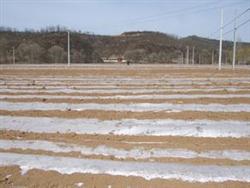
Land preparation and fertilization: Choose a sunny, well-ventilated plot with deep, loose, fertile soil, abundant water and good drainage. Base fertilizer should be mainly organic fertilizer, applied as early as possible in combination with autumn plowing, so that the fertilizer can fully decompose and blend with the soil. According to experiments, applying base fertilizer in autumn increases yield by 14.9% compared with applying it in spring. The base fertilizer can be...
-
Key Technical Points for High-Efficiency Cultivation of Cucumber Intercropped with Kidney Beans
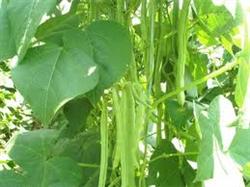
At present, greenhouse-cultivated kidney beans are in the vine-extending and flowering stage. How can we ensure a bumper harvest? Here we suggest vegetable growers grasp the following key measures for management. 1. Topping at the right time. The cultivation environment for greenhouse kidney beans differs from that for open-field kidney beans. Due to the higher temperature inside the greenhouse, growth is faster...
-

How to intercrop and relay-crop kidney beans in cotton fields? Detailed technical key points
1. Choose good varieties. Varieties should be selected that have wide adaptability, strong stress resistance, a high pod-setting rate, and high yield. 2. Sow at the right time. During cultivation, the appropriate sowing time should be grasped, and seeds that are plump and glossy should be selected for sowing, so that plant growth and development are under good environmental conditions, reducing flower and pod drop and improving...
-
Detailed Explanation of Spring Corn Intercropping with Autumn Cucumber Cultivation Techniques
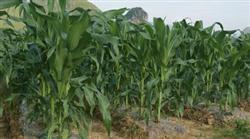
(1) Scope of application: Suitable for promotion and application in dryland corn planting areas covered with plastic film. (2) Operating procedures: 1. Land selection: Choose plots with flat terrain, deep soil layers, loose soil texture, medium or above fertility, and strong water and fertilizer retention capacity. 2. Land preparation: After harvesting the previous crop, immediately clear stubble and prepare the land, then...
-
Key Technical Points for Intercropping Shaggy Mane Mushrooms in Pepper Fields
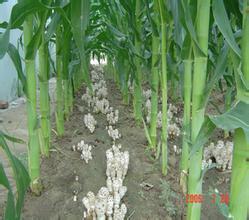
Intercropping shaggy mane mushrooms (Coprinus comatus) in pepper fields is a good way to cultivate them in a semi-wild manner. It can save the expense of building mushroom houses, does not take up extra space, and can greatly increase the economic benefit per unit of land area. Generally, after the peppers are planted, trenches are dug in the middle of the pepper rows, material is laid, and mushroom spawn is scattered. For the convenience of managing and harvesting the mushrooms...
-
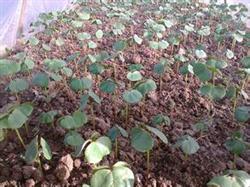
Method for Relay Intercropping Cotton with Spring Cauliflower and Summer Lettuce
The real culprit behind this headless cotton phenomenon is a pest called cotton thrips, which is the most serious pest damaging cotton fields, with tobacco thrips being the main species. The adults and nymphs of tobacco thrips are very small, difficult to see with the naked eye, and can only be seen on the underside of leaves with a magnifying glass. It damages cotton seedlings as adults or 1st and 2nd instar nymphs...
条件筛选