-

Identification and Control Methods for Common Lotus Root Diseases
What are the common lotus root diseases and how to control them? Asking for advice. Common lotus root diseases are: 1. Lotus root brown spot disease: a common leaf disease of lotus root, producing light brown lesions on the leaves, causing localized drying of the diseased leaves. Control methods: rational close planting to ensure ventilation and light penetration in the lotus field; appropriately increase the application of phosphorus and potassium fertilizers to enhance...
-
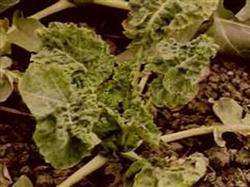
Symptom Identification and Control Methods of Rapeseed Viral Diseases
[Distribution and Damage] It occurs to varying degrees in all rapeseed-producing areas across the country, and generally the winter rapeseed areas suffer more severe disease than the spring rapeseed areas. This disease is caused by single or mixed infection of viruses such as Turnip mosaic virus (TuMV), Cucumber mosaic virus (CMV), Tobacco mosaic virus (TMV) and Rapeseed mosaic virus (YMV). Generally, yield is reduced by 20%-3...
-
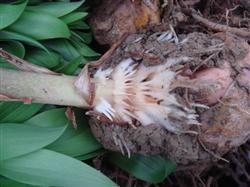
Symptom Identification and Control Methods for Rhizoctonia Disease in Lilies
Symptoms: If the infection is mild, it only affects the leaves in the soil and the green leaves at the lower part of young shoots, and sunken light brown spots appear on the leaves. Generally speaking, although the growth of the plant is somewhat affected, it can still continue to grow. In severely infected plants, aboveground growth is hindered, and the white underground leaves as well as the lowest aboveground leaves will rot or wilt and fall off, leaving only brown scars on the stems.
-
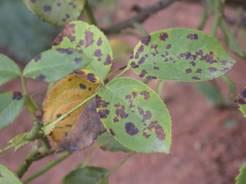
Symptom Identification and Control Methods of Rose Black Spot Disease
The rose black spot fungus attacks leaves, young shoots and flower stalks. When leaves are first infected, small purplish-brown spots appear on the upper surface, gradually expanding into round or irregular dark brown lesions, 1-12 mm in diameter, with radiating edges, which is the characteristic symptom of black spot disease. In the later stage the leaves turn yellow, the center of the lesion becomes grayish-white, and on it are borne...
-
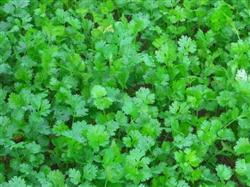
What is cilantro black rot? Symptom identification and control methods
How to grow cilantro in summer? Please guide me. To grow cilantro well in summer, you can refer to the following methods: 1. Land preparation and fertilization. For cilantro plots, choose fertile, loose sandy loam with good water retention and drainage and close to a water source. Before sowing, while turning the soil, apply 3000-3500 kg of high-quality decomposed manure per mu as a base fertilizer, then build beds 2 m wide...
-
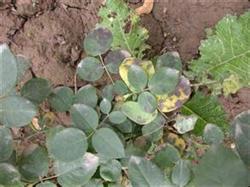
Identification and Control of Gray Mold in Roses
Symptoms: When gray mold occurs on rose leaves at the leaf margins and leaf tips, it first appears as water-soaked light brown spots that are smooth and slightly sunken, then expands and rots. When flower buds are affected, the spots are grayish-black and can prevent the flower from opening; diseased buds turn brown and die. When flowers are affected, some petals turn brown, shrivel and rot. The gray mold fungus also attacks the branch ends after flowers are cut, and the black diseased area can extend several centimeters downward from the infection point. In warm, humid conditions, the gray mold layer can completely cover the infected area.
-
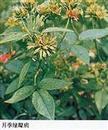
Symptom Identification and Control Methods for Rose Green Petal Disease
Symptoms: The main manifestation is narrow, thin petals that appear green and sepal-like or leaf-like, with the corolla turning green and flowers transforming into leaves; this is the typical symptom of rose green petal disease. Any plant affected by this disease, under the same cultivation and management conditions, will be more dwarfed than ordinary rose varieties, with profuse lateral branching, narrow and small leaves, and the petioles and stems rarely showing red coloration...
-
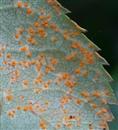
Symptoms, Identification, and Control Methods of Rose Rust
Rose rust occurs in climatically suitable regions around the world. It sometimes causes severe damage to greenhouse-cultivated roses. In addition to roses, the disease can also infect rugosa roses, wild roses, and other flowering plants. Pathogen: Rose rust has many pathogenic species; 10 species have been reported abroad and 3 species are known in China. Among them, Phragmidium montivagum (Pers.) Schlecht. is the main pathogen, belonging to the phylum Basidiomycota, genus Phragmidium.
-

What to Do When Long-Term Use of Cake Fertilizer in Home Gardening Causes Soil Acidification
Cake fertilizer is the cheapest fertilizer for growing flowers in the city. Flowers and plants grown with cake fertilizer and those grown without it differ in leaf color and in the size of the flowers and plants. Harm: So...
-

How to Tell Male and Female Red-Eared Sliders Apart? Master These Identification Methods
How to Tell Male and Female Red-Eared Sliders Apart?
条件筛选