Symptom Identification and Control Methods of Rose Black Spot Disease
The rose black spot fungus attacks leaves, young shoots and flower stalks. When leaves are first infected, small purplish-brown spots appear on the upper surface, gradually expanding into round or irregular dark brown lesions, 1-12 mm in diameter, with radiating edges, which is the characteristic symptom of black spot disease. In the later stage the leaves turn yellow, the center of the lesion becomes grayish-white, and on it are borne...
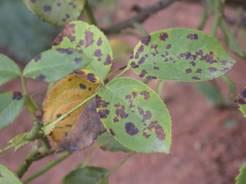
The rose black spot fungus attacks leaves, young shoots and flower stalks. When leaves are first infected, small purplish-brown spots appear on the upper surface, gradually expanding into round or irregular dark brown lesions, 1-12 mm in diameter, with radiating edges, which is the characteristic symptom of black spot disease. In the later stage the leaves turn yellow, the center of the lesion becomes grayish-white, and on it are borne small black dots, which are the fungus's acervuli. In some rose varieties the lesions are often surrounded by a yellow halo. In some varieties several lesions frequently join together into yellow patches while the lesion edges are still green, which is called a "green island". When young shoots and flower stalks are infected, purplish-brown to dark brown elongated lesions form, slightly sunken; when the disease is severe, all the leaves on the lower and middle parts of the plant drop off, leaving only a few new leaves at the top.
Rose black spot disease is caused by infection by Actinonema rosae, a fungus of the genus Actinonema, family Melanconiaceae, order Melanconiales, class Coelomycetes, subdivision Deuteromycotina. The fungus's conidia are produced within the acervuli; the conidia are long-ovate or long-elliptical, two-celled, and spread the infection. The temperature range for the growth and development of the fungus is 10-35°C, with the optimum temperature being 20-25°C.
The rose black spot fungus overwinters as mycelium or conidia on bud scales, leaf scars, dead shoot tips and fallen leaves. After rain the following spring, conidia are produced, spread by wind and rain and splashing water, and directly penetrate through the epidermis. Under suitable temperature and humidity conditions, symptoms can appear after an incubation period as short as 3-6 days, and about 8-32 days pass from disease onset to leaf drop; when temperatures are high, the period of diseased leaf drop is shortened. Late March to mid-June and late September to November are the peak periods of the disease. After rainy, dewy and typhoon-rain muggy weather, with poor ventilation, and in weak and old plants, the disease is relatively severe. Generally, varieties such as 'Jinbuhuan', 'Jinyuhong', 'Peace' and 'Jinzhiyuye' are the most susceptible. Varieties such as 'Elizabeth', 'Hei Qianceng' and 'Isbel' are relatively resistant. No immune varieties have been found.
Control methods 1. Sweep up fallen leaves at any time, remove diseased leaves, and prune to control branch density. For watering, drip irrigation, furrow irrigation or watering along the edge of the pot are best, to shorten as much as possible the time water droplets remain on the leaf surface and keep the leaves dry.
2. Spray the surface soil with 1% copper sulfate, or cover the surface soil with sawdust or coal ash to a thickness of about 8 mm, which can inhibit and kill some of the pathogens on the soil surface and reduce infection opportunities.
3. During the disease period, spray with 75% chlorothalonil at 600-800 times dilution or with 1000 times dilution of triamiphos.