Symptom Identification and Control Methods for Rhizoctonia Disease in Lilies
Symptoms: If the infection is mild, it only affects the leaves in the soil and the green leaves at the lower part of young shoots, and sunken light brown spots appear on the leaves. Generally speaking, although the growth of the plant is somewhat affected, it can still continue to grow. In severely infected plants, aboveground growth is hindered, and the white underground leaves as well as the lowest aboveground leaves will rot or wilt and fall off, leaving only brown scars on the stems.
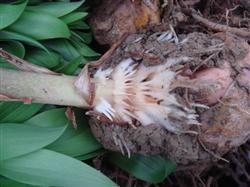
Symptoms: If the infection is mild, it only affects the leaves in the soil and the green leaves at the lower part of young shoots, and sunken light brown spots appear on the leaves. Generally speaking, although the growth of the plant is somewhat affected, it can still continue to grow. In severely infected plants, aboveground growth is hindered, and the white underground leaves as well as the lowest aboveground leaves will rot or wilt and fall off, leaving only brown scars on the stems. Young leaves and growing points are often affected. Infected plants will have inhibited rhizome development, which in turn hinders plant growth, resulting in unsatisfactory flowering or even no flowers, because the flower buds have already dried up at a very early stage.
Disease pattern: The pathogen is Rhizoctonia solani. The fungus mainly infects plants from the soil and is most active under conditions with a temperature above 15°C and high humidity.
Control methods: Use a soil disinfectant to disinfect soil that is suspected of being infected. After disinfection, it must be ensured that the soil is no longer infected, especially in summer when the soil temperature is high; if the previous crop has already shown infection, general soil disinfectants cannot be applied. Before planting, treat the soil in advance with a fungicide for controlling Rhizoctonia and mix it thoroughly into the soil 10 cm deep.