-
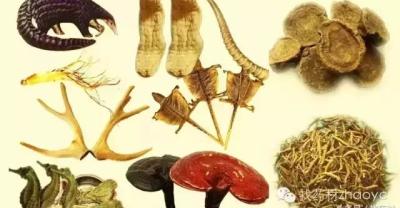
A detailed introduction to the identification methods for 7 medicinal herbs
We all know that traditional Chinese medicine can help treat diseases, but most people may not be very familiar with the selection and purchase of the medicinal herbs used in traditional Chinese medicine, so what are some better methods...
-

Identification and Control of the Angelica Swallowtail Caterpillar Pest
The angelica swallowtail, also known as the fennel swallowtail, belongs to the order Lepidoptera, family Papilionidae. 1. Damage situation: The larvae cause damage, feeding on leaves at night, creating notches, and in severe cases eating all the leaves so that only the petioles and veins remain; they also feed on flowers and fruits. This insect has a large appetite, seriously affecting the growth of angelica and reducing yield. 2. Morphological characteristics. Adult: A large butterfly, with spring and summer forms. The summer form has a body length of about 25 mm and a wingspan of 90 mm; the spring form is slightly smaller. The body is yellow, with black stripes running longitudinally along the back. Both forewings and hindwings are yellow,
-
Identification and Control Methods of Diseases in the Seedling Stage of Panax notoginseng
Because Panax notoginseng grows year-round in a shaded and humid environment, diseases such as black spot, round spot, phytophthora blight, rust rot and powdery mildew occur and cause serious damage, with annual losses from various diseases reaching 30%-40%, and in severe cases over 80%. The stage of emergence and leaf growth, when the plant is tender, the root system is underdeveloped and stress resistance is poor, is an important period for initial infection by many pathogens. If spring rain comes early and frequently, the disease spreads rapidly and the damage and losses are severe. Panax notoginseng generally takes 60-75 days from sowing to emergence; strengthening
-
What are the identification methods for the Chinese medicinal herb Schisandra chinensis?
Schisandra is divided into Liao Schisandra and Shan Schisandra, both traditional Chinese medicinal herbs with a long history of use. In recent years they have sold very well, especially last year when Korean pharmaceutical traders came to China to purchase large quantities of Liao Schisandra, causing the price to soar to around 70 yuan. As the price of the medicinal herb rose, unscrupulous traders tried every means to adulterate and counterfeit it. When the price of Liao Schisandra was high, they mixed Shan Schisandra into it for sale. Now the prices of Liao Schisandra and Shan Schisandra are similar, and both remain high, so they have mixed in the seeds of a wild type of cultivated mountain grape. To improve everyone's identification ability, the following
-
Identification and Control Methods for Goji Berry Pests and Diseases
(1) Black fruit disease. The pathogen is a species of ascomycete fungus (scientific name Glomerella cingulata (Stonem) Sch. et Spauld). It is mainly prevalent in Hebei, Shandong, Shaanxi and other places, and mostly occurs during the rainy season. Affected fruits, flowers and buds turn black, and under humid conditions the diseased parts produce orange-red slime, which is the conidial mass of the pathogen. Control methods: ① Strengthen water and fertilizer management in winter and spring, prune lightly in autumn and winter to promote early ripening and higher yield of spring fruits; control
-
Identification and Control Methods for Common Diseases and Pests of Panax notoginseng
(1) Damping-off, also known as "rotten foot plague." The pathogen is a type of imperfect fungus among the fungi, harming seeds, seed sprouts and seedlings. Affected seeds rot into a milky white juice-like state, affected seed sprouts turn dark brown and die; affected seedlings show a dark brown ring-shaped depression at the base of the false stem (leaf stalk); seedlings bend over and die. Control methods: ① Before sowing, disinfect the soil with carbendazim or lithospermum liquid. ② Promptly pull out diseased plants when found, spread lime powder around the diseased plants, and spray with 50% thiophanate-methyl 1000-fold solution or 50% methyl
-
Symptoms, Identification, and Control Methods of Pinellia ternata Root Rot
It mostly occurs in hot and humid seasons; the underground tubers rot, and the above-ground parts turn yellow, wilt, fall over, and die. Control methods: (1) Pay attention to drainage after rain. (2) In the early stage of the disease, drench the planting holes with 5% lime milk. (3) Control underground pests.
-
Identification and Control Methods of Diomea cremata
Diomea cremata Butler belongs to the family Noctuidae of the order Lepidoptera. It is one of the looper caterpillars and is one of the important pests damaging edible fungi such as lingzhi (Ganoderma lucidum), oyster mushrooms and wood ear fungus, and it occurs fairly commonly in China. The damage is characterized mainly by feeding on the lingzhi cap and flesh, leaving curved tunnels at the damaged sites. It also leaves notched holes on the fruiting bodies, reducing the commercial value of lingzhi. Morphological characteristics: adult body length 11 mm, wingspan 25-26 mm. The male is dark purplish brown, and the head, thorax
-
Identification methods and control techniques for diseases and pests of Schisandra chinensis
Diseases I. Leaf blight 1. Symptoms. Caused by infection with the leaf blight pathogen of Schisandra chinensis, it is a commonly occurring disease. It is prone to occur from late May to early August when temperatures are high, rain is frequent and ventilation is poor. The disease first starts from the leaf tip or leaf margin, with dark brown lesions appearing, gradually spreading downward and expanding to the entire leaf, and finally causing the whole leaf to turn dark brown, dry up and fall off. The fruit then shrinks, becoming early fruit drop. 2. Control. First, choose a plot with good ventilation. Second, strengthen field management, carry out pruning reasonably, and avoid
-
Identification and Control of the Oriental Mole Cricket, a Pest of Reishi Mushrooms
The oriental mole cricket (Gryllotalpa orientalis Burmeister) is commonly known as tugou or digou. It belongs to the order Orthoptera, family Gryllotalpidae. 1. Morphology and habits: The adult is 29-31 mm long. The head is conical and dark blackish brown. The pronotum is oval. The forewings are yellowish brown and can extend to the middle of the abdomen; the abdomen is spindle-shaped, blackish brown on the dorsal side and dull yellow on the ventral side, with a pair of relatively long cerci at the tip. The forelegs are specialized as digging legs, and the inner margin of the dorsal side of the hind tibia has 3-4 spines. The nymph resembles the adult in body shape and is gray
条件筛选