-
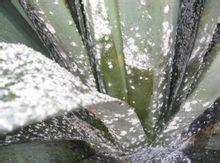
Identification and Control Methods for Pineapple Mealybugs
Pineapple mealybugs belong to the order Homoptera, family Pseudococcidae. Dysmicoccus brevipes is the most commonly seen species. The damage symptoms are caused by adults and nymphs feeding on the sap of pineapple rhizomes, leaves, fruits and seedlings. Affected leaves first show symptoms starting from the lower part, gradually fading upward to yellow and finally turning red-purple; in severe cases all leaves soften and droop...
-
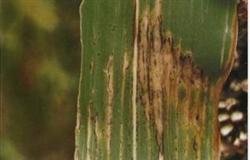
Symptom Identification and Control Methods of Sorghum Black Bundle Disease
Symptoms Sorghum black bundle disease is a vascular bundle disease, also known as tracheomycotic blackening disease. When symptoms appear on leaves, brown streaks form on the leaf veins, mostly presenting as large necrotic spots along one or both sides of the main vein, causing the leaves and leaf sheaths to turn purple or brown; in severe cases the leaves dry up, the stalks become slightly thicker, and branching occurs on the upper part of diseased plants. Cross-sectioning the diseased stalk...
-
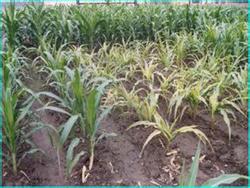
Symptom Identification and Control Methods for Sorghum Downy Mildew
Sorghum seedling blight - Symptoms: The disease can occur when sorghum grows to 4-5 leaves. It starts from the lower leaves and then spreads upward. Infected leaves develop purplish-red streaks that gradually merge, causing the leaves to gradually die from the tip, and the seeds turn very brown. Sorghum seedling blight - Pathogen: Known as Fusarium moniliforme, a fungus belonging to the subphylum Deuteromycotina. On PDA medium...
-
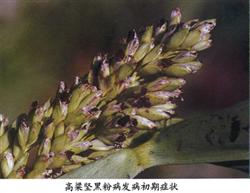
Symptom Identification and Control Methods for Sorghum Head Smut
Symptoms The diseased plants are shorter than healthy plants. In the early stage of the disease, the ear sheath of the diseased ear is very tight, the lower part is swollen, and the flag leaf is upright; when peeled open, a white rod-shaped structure can be seen inside, namely the smut gall. The smut gall inside the sheath is initially small and finger-shaped, gradually grows larger, and later the middle part swells into a cylindrical shape and becomes relatively hard. During the development of the smut gall, the internal tissue changes from white to black, then...
-
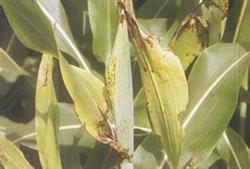
Symptom Identification and Control Methods of Sorghum Leaf Spot
Symptoms Also called spot disease. All parts of the whole plant can be affected, mainly damaging the leaves. The lesions are irregular in shape, long to spindle-shaped or semicircular, varying in size, can reach about 1cm or more, yellow-brown to gray-brown, with red-purple edges. The lesions often start from the leaf margin or leaf tip, and some also occur on the leaf surface or the upper part of the panicle...
-
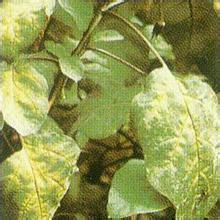
Identification and Remedial Measures for Nutrient Deficiency Symptoms in Eggplant
During the growth and development of eggplant, once a certain element is deficient, the plant's external morphology generally shows corresponding deficiency symptoms, and in production this is mostly used as the basis for diagnosing nutrient deficiencies. Nitrogen deficiency: when eggplant lacks nitrogen, the leaf color becomes pale, old leaves turn yellow, and in severe cases they dry up and fall off, flower buds stop developing and turn yellow, and the heart...
-
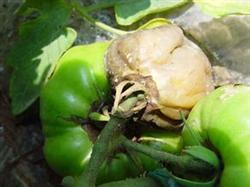
Symptom Identification and Chemical Control Methods for Tomato Sour Rot
The symptoms currently occur only in a few regions. It damages only the fruit, and mostly overripe fruit; fruit with wounds is especially susceptible. The diseased part softens, the skin turns slightly brown, becomes wet-rotten and slightly wrinkled, with fine cracks. When humidity is high, sparse white mold grows on the surface of the diseased part. Finally the diseased fruit leaks water, rots, and has a sour odor. Disease pattern...
-
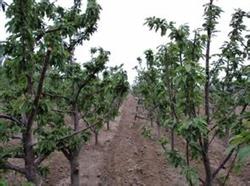
Identification and Control Methods for Common Cherry Diseases and Pests
Many of the diseases and pests affecting cherries are the same as those of other stone fruit trees, so their control methods can be used for reference. The main diseases harming cherries are shot hole disease, crown and root collar rot, and gummosis. Crown and root collar rot mostly occurs on trees in their first fruiting stage, causing the crown and root collar to decay. Control methods: mainly avoid piling soil around the root collar for long periods, and control underground pests that gnaw and wound the bark. At the same time, check frequently; when diseased plants are found, scrape and treat them promptly, and after scraping, disinfect with Bordeaux mixture or lime sulfur mixture. For severe crown and root collar rot, the aboveground growth can also be restored through spring bridge grafting. The main pests harming cherries include the red-necked longhorn beetle, the golden-line jewel beetle, the small clearwing moth, the spherical scale insect, and the phalera caterpillar. The small clearwing moth has one generation per year, and its larvae cause damage within the cortex of large branches. Control measures mainly include spraying during the peak emergence period of adults, whitewashing the branches and trunk to prevent egg laying, and promptly spraying or digging out larvae when their frass is found in the field.
-
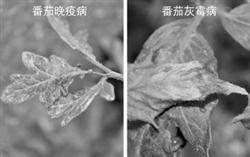
Identification Methods for Late Blight and Gray Mold in Greenhouse Tomatoes
Late blight and gray mold are important diseases that severely affect the yield and output value of spring-season greenhouse tomatoes in northern China. Early detection and accurate identification are the prerequisites for effective prevention and control. Their field symptoms often vary with cultivar and environmental conditions, and are easily confused with each other or with other diseases, causing confusion for growers. The following is an introduction to the...
-
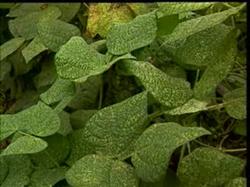
Identification and Control Methods for the Mung Bean Pest, the Legume Pod Borer
(1) Damage conditions. Also known as the cowpea pod borer, the legume pod borer, and the cowpea borer. It is fairly widespread in China, with severe outbreaks south of the Yangtze River. The larvae bore into and feed on the host's flower organs, causing flowers to drop; they bore into pods, causing pod drop in the early stage and pod and seed rot in the later stage. In addition, they can spin silk to tie several leaves together and roll them up, ...
条件筛选