Symptom Identification and Control Methods for Rose Green Petal Disease
Symptoms: The main manifestation is narrow, thin petals that appear green and sepal-like or leaf-like, with the corolla turning green and flowers transforming into leaves; this is the typical symptom of rose green petal disease. Any plant affected by this disease, under the same cultivation and management conditions, will be more dwarfed than ordinary rose varieties, with profuse lateral branching, narrow and small leaves, and the petioles and stems rarely showing red coloration...
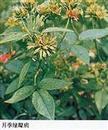 Symptoms
The petals are narrow and thin, appearing green and sepal-like or leaf-like, the corolla turns green, and flowers transform into leaves; these are the typical symptoms of rose green petal disease. Any plant affected by this disease, under the same cultivation and management conditions, will be more dwarfed than ordinary rose varieties, with profuse lateral branching, narrow and small leaves, and the petioles and stems less commonly showing red coloration. The flowers are highly fertile, blooming profusely. Until winter, the green flowers remain unchanged for a long time, but when temperatures are high in summer, an abscission layer easily forms at the base of the flower stalk, and the flowers drop off at the slightest touch.
Pathogen
Mycoplasma-like organism (MLO). This type of mycoplasma-like organism exists in the phloem cells at the base of the leaf-like corolla of "Green Sepal" and in young petioles, appearing oval and nodular; the new individuals formed after division are mostly spherical bodies, with individual diameters of 100-800 nanometers.
Transmission Routes
At present, the main known route of virus transmission is artificial grafting. Whether insect vectors or other mediators of transmission also exist in nature remains to be investigated.
Control Methods
1. Strengthen quarantine to prevent virus-carrying nursery stock from being brought into disease-free areas.
2. Promptly control piercing-sucking mouthpart pests and other suspected transmission vectors.
3. Use disease-free plants as propagation material, promptly remove diseased plants, and reduce the source of pathogen spread.