Symptom Identification and Control Methods of Rapeseed Viral Diseases
[Distribution and Damage] It occurs to varying degrees in all rapeseed-producing areas across the country, and generally the winter rapeseed areas suffer more severe disease than the spring rapeseed areas. This disease is caused by single or mixed infection of viruses such as Turnip mosaic virus (TuMV), Cucumber mosaic virus (CMV), Tobacco mosaic virus (TMV) and Rapeseed mosaic virus (YMV). Generally, yield is reduced by 20%-3...
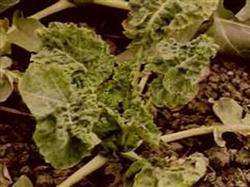
[Distribution and Damage] It occurs to varying degrees in all rapeseed-producing areas across the country, and generally the winter rapeseed areas suffer more severe disease than the spring rapeseed areas. This disease is caused by single or mixed infection of viruses such as Turnip mosaic virus (TuMV), Cucumber mosaic virus (CMV), Tobacco mosaic virus (TMV) and Rapeseed mosaic virus (YMV). Generally, yield is reduced by 20%-30%, and in severe cases by more than 70%. Seed oil content is reduced by 7%.
[Symptoms] Different types of rapeseed show different symptoms. The symptoms of Brassica napus rapeseed are mainly the yellow spot type, mosaic type and streak type; the symptoms of Brassica rapa and Brassica juncea rapeseed are mainly the crinkled veinclearing mosaic type and the dwarf type.
1. Yellow spot type Small necrotic spots and yellow patches appear on new leaves. The former spots are relatively small, light brown, and densely packed. The latter are larger, light yellow or orange-yellow, round or irregular in shape, with a clear boundary from healthy tissue, and often cause leaves to turn yellow and die.
2. Mosaic type Leaves show a mosaic of alternating yellow and green, with translucent secondary veins and veinlets, and slight crinkling.
3. Streak type Brown streaks appear on one side of stems and branches, and the streaks extend upward and downward, appearing as necrotic streaks. In the later stage, the necrotic streaks split longitudinally, and white secretions appear on the cracks. After the streaks merge and spread, they often cause half or the entire plant to die.
4. Crinkled veinclearing mosaic type The leaf veins first become translucent, similar to the symptoms of the mosaic type, but the secondary veins and fine veins show obvious veinclearing, and the area near the cleared veins gradually loses green, causing the leaves to show a mosaic of alternating yellow and green, with severe crinkling and deformity, and the mesophyll thickens and becomes brittle.
5. Dwarf type The plant form is dwarfed, the leaves are crinkled and curled inward, branching is reduced, flower buds do not open, and siliques are deformed.
[Disease Development Pattern] Turnip mosaic virus and Cucumber mosaic virus are mainly transmitted non-persistently by three species of aphids (turnip aphid, green peach aphid, cabbage aphid), and the virus sap can also transmit the disease. Winged aphids fly to diseased plants and feed on sap for about 5 minutes to acquire the virus, then fly to healthy plants and feed on sap for less than 1 minute to transmit the virus and cause disease. However, after acquiring the virus, the transmission ability disappears after 20-30 minutes. In winter rapeseed areas, the virus-source aphids oversummer on cruciferous vegetables, volunteer rapeseed and some weeds. In autumn, they are first transmitted by aphids to early-sown cruciferous vegetables such as radish and Chinese cabbage, and then transmitted to rapeseed to infect and cause damage. In winter, the virus overwinters in the bodies of diseased plants. In the following spring, when the average ten-day temperature rises above 10°C, symptoms gradually appear on diseased plants, reaching a peak around the final flowering stage. Generally, warm and dry spring conditions favor aphid reproduction and activity, resulting in severe disease; early-sown fields close to vegetable fields, or fields with dense nearby weeds, suffer severe disease; Brassica napus rapeseed suffers mild disease and is relatively resistant, while early-maturing rapeseed is relatively susceptible.
[Control Methods]
1. Agricultural measures Select disease-resistant varieties; sow at an appropriate late time.
2. Control of virus-source aphids From before rapeseed emergence to the five-leaf stage after emergence, strengthening the control of aphids on cruciferous vegetables near rapeseed fields can greatly reduce the migration of winged aphids to rapeseed fields to transmit the virus. Alternatively, set up yellow boards at the edges of rapeseed fields to trap and kill aphids. Or after sowing rapeseed, cover the inter-row spaces of rapeseed with aphid-repellent colored film (silver-gray, milky white or black), or hang colored film strips in rapeseed fields, both of which can repel aphids. If autumn is early, begin spraying when the rate of aphid-infested plants at the seedling stage reaches 10%, or in spring during the bolting and flowering stage when 10% of stems, branches or inflorescences have aphids. Spray for control with 40% dimethoate emulsifiable concentrate or 40% omethoate emulsifiable concentrate at 1000-2000 times dilution, or 50% dichlorvos emulsifiable concentrate at 1000 times dilution, or 70% menazon at 1000-1400 times dilution, or 50% malathion at [times] dilution, or 50% monocrotophos emulsion at 2000-3000 times dilution, or 50% pirimicarb (Pirimor) wettable powder at 5000 times dilution and other pesticides.