Symptom Identification and Control Methods of Sorghum Black Bundle Disease
Symptoms Sorghum black bundle disease is a vascular bundle disease, also known as tracheomycotic blackening disease. When symptoms appear on leaves, brown streaks form on the leaf veins, mostly presenting as large necrotic spots along one or both sides of the main vein, causing the leaves and leaf sheaths to turn purple or brown; in severe cases the leaves dry up, the stalks become slightly thicker, and branching occurs on the upper part of diseased plants. Cross-sectioning the diseased stalk...
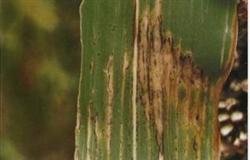
Symptoms Sorghum black bundle disease is a vascular bundle disease, also known as tracheomycotic blackening disease. When symptoms appear on leaves, brown streaks form on the leaf veins, mostly presenting as large necrotic spots along one or both sides of the main vein, causing the leaves and leaf sheaths to turn purple or brown; in severe cases the leaves dry up, the stalks become slightly thicker, and branching occurs on the upper part of diseased plants. Cross-sectioning the diseased stalk reveals that the vascular bundles, especially the xylem vessels, turn brown and become blocked. In longitudinal section, the vascular bundles can be seen turning reddish-brown or dark brown from bottom to top, with the vascular bundles of the basal internodes turning black more noticeably than those of the upper internodes. Severely diseased plants wither early, fail to head or set seed, and yields are reduced by 50%. In China it is distributed in the three northeastern provinces.
Pathogen Acremonium stictum W. Gams, known as straight-branched Acremonium, belongs to the Deuteromycotina fungi. Synonym Cephalosporium acremonium Corda. Colonies are circular, with dense aerial mycelium, cottony-woolly in texture, initially white, later light pink. Conidiophores are non-septate, measuring 40-60 x 3 (um). Conidia are single-celled, nearly colorless, oval, measuring 4 x 1-1.5 (um). Besides damaging sorghum, it can also damage corn, soybean, wheat, oats, cotton and many other monocotyledonous and dicotyledonous plants.
Transmission routes and disease conditions The disease is carried by seeds and soil. After the pathogen invades from the host roots, it enters the vascular bundle tissue. Under natural conditions, the field pathogen can also infect leaves and leaf sheaths, spreading through the vascular bundles to cause disease. Egypt, Argentina, Venezuela, Mexico, Sudan, Honduras and other countries have successively reported the discovery of this disease. In China, Tx622A and rx623A show obvious susceptibility. Abroad, Sc35-6, Sc630-11E and GPR-148 show disease resistance.
Control methods (1) Breed disease-resistant varieties. (2) Carry out quarantine to prevent the spread of the disease.