Identification and Control Methods for the Mung Bean Pest, the Legume Pod Borer
(1) Damage conditions. Also known as the cowpea pod borer, the legume pod borer, and the cowpea borer. It is fairly widespread in China, with severe outbreaks south of the Yangtze River. The larvae bore into and feed on the host's flower organs, causing flowers to drop; they bore into pods, causing pod drop in the early stage and pod and seed rot in the later stage. In addition, they can spin silk to tie several leaves together and roll them up, ...
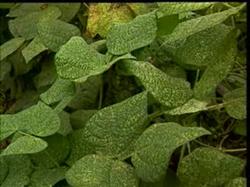
(1) Damage conditions. Also known as the cowpea pod borer, the legume pod borer, and the cowpea borer. It is fairly widespread in China, with severe outbreaks south of the Yangtze River. The larvae bore into and feed on the host's flower organs, causing flowers to drop; they bore into pods, causing pod drop in the early stage and pod and seed rot in the later stage. In addition, they can spin silk to tie several leaves together and roll them up, with the larvae nibbling the leaf flesh inside; or they bore into young stems, causing dead tips, greatly affecting yield and quality.
(2) Morphological characteristics. The adult is 13 mm long, with a wingspan of 24-26 mm, dark yellowish-brown; the forewings have 2 white transparent spots in the center, and the hindwings are white and semi-transparent with dark brown wavy lines on the inner side. The egg is flat and oval, light green, with a hexagonal network pattern. The mature larva is 18 mm long, with the head and thoracic dorsum brown and the body yellow-green. The pupa is 13 mm long and yellowish-brown.
(3) Life habits. The number of generations per year varies by region. It hides by day and comes out at night, with 21:00 to 1:00 midnight being the peak period of adult activity; the adults are phototactic. The legume pod borer is a pest that favors warmth, and occurs especially abundantly in southern China. For example, in North China it can occur 3-4 generations per year, overwintering as pupae in the soil; in South China it has 6-7 generations, overwintering as larvae or with no obvious overwintering phenomenon. Generally, from June-July to September-October each year is the peak damage period of this pest.
(4) Control methods
① Promptly remove fallen flowers and fallen pods in the field, and pick off the damaged rolled leaves and pods to reduce the source of the pest.
② Set up black light lamps in the field to trap and kill adults.
③ Spray insecticides, such as 50% dichlorvos emulsifiable concentrate at 800 times dilution, or 25% fenvalerate-malathion mixture at 3000 times dilution, or 10% permethrin, 2.5% deltamethrin, 10% cypermethrin, etc., each at 3000-4000 times dilution. Starting from the bud stage, spray the buds and flowers once each every 10 days.