-
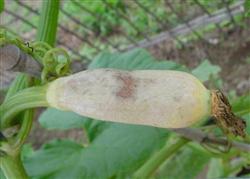
What causes zucchini fruit abortion? Early spring greenhouse prevention and control measures
In early spring zucchini cultivation in greenhouses, the fruit is prone to stopping its expansion midway, turning yellow, and wilting. Eventually it becomes shriveled; this symptom can appear both before and after flowering, and is commonly known as fruit abortion. The causes of fruit abortion are as follows: 1. In early spring cultivation, the assimilation capacity of the leaves declines, and the plant accumulates less through photosynthesis. 2. Due to...
-
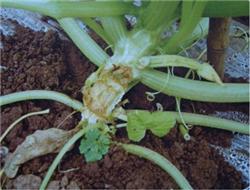
What are the control methods for zucchini soft rot?
Zucchini soft rot mainly damages the root and stem parts and the fruit (the zucchini itself). During the fruiting stage, the stems and the base of the leaf stalks first become water-soaked; especially at natural cracks or wounds on the root and stem, they gradually soften, the diseased part becomes sunken, and the internal tissue rots, forming a grayish-brown viscous substance with a foul odor. The water in the affected part evaporates,...
-
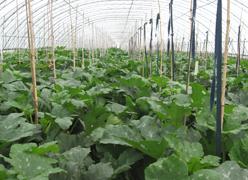
Key recent management focus for zucchini: controlling excessive vigor
Recently, when visiting the countryside, I saw that the zucchini grown in greenhouses by vegetable farmers was generally growing too vigorously, and the plants were setting fruit poorly. When asked why, many vegetable farmers told the reporter: "The weather forecast earlier said this year would be a cold winter, so we thought temperature control alone would be enough to manage plant growth well and avoid excessive vegetative growth. If we also used plant growth regulators, it would very likely seriously affect the growth of the zucchini, so we did not use regulators. But unexpectedly, although the outdoor temperature this year was not high, the weather was clear and fine, and the temperature inside the greenhouse was relatively high, which caused severe excessive growth of the zucchini."
-
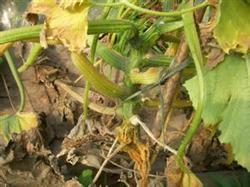
What are the control methods for zucchini brown spot disease?
There are mainly two diseases that can cause stalk rot in zucchini: the first is gummy stem blight. This disease mainly infects zucchini at the stem nodes; the infected area is initially dark brown, then gradually turns black, and the lesion tends to split open, exuding a white gelatinous substance; in the later stage the diseased stem shrivels and splits longitudinally, resembling tangled hemp. The second...
-
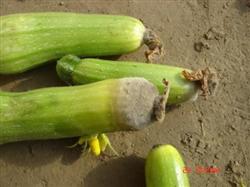
What are the control methods for zucchini gray mold?
In recent years, the area of zucchini grown in solar greenhouses has been relatively large, and the occurrence of zucchini gray mold often causes tender squash to rot, affecting yield and profitability. Therefore, measures should be taken for integrated control. Grafting for disease prevention. Using Yunnan black-seeded squash (Cucurbita ficifolia) as rootstock and zucchini as scion for grafting can increase zucchini's resistance to...
-
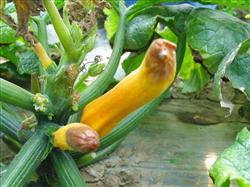
What are the control methods for zucchini cottony leak?
Disease characteristics: Zucchini cottony leak mainly damages the fruit, and sometimes damages leaves, stems and other parts. When leaves are affected, dark green, round or irregular water-soaked lesions first appear, and under high humidity they look as if scalded by boiling water. When fruit is affected, oval, water-soaked dark green lesions first appear. Under dry air conditions, the lesions turn...
-
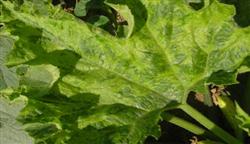
Three measures to control excessive vigor in zucchini; growers should do this
1. Soak seeds in 10% trisodium phosphate solution for 20 minutes, or in 55°C warm water for 30 minutes. 2. In the early stage of disease, use 1.5% Zhibingling emulsifiable concentrate at 1000 times dilution, or 20% Virus A wettable powder at 500 times dilution, or NS-83 resistance enhancer at 100 times dilution, or 0.5% Antiviral Agent No. 1 at 250-300 times dilution, or 1000 times potassium permanganate solution...
-
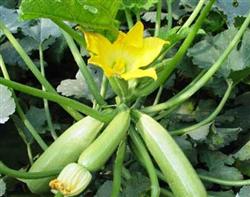
Why should hormone growth regulators not be used to control excessive growth in overwintering zucchini?
For zucchini seedlings, the seedling age should preferably be about 45 days (5 true leaves). Sow seeds at a spacing of 3.3 cm between plants and rows, cover the seeds with about 3 cm of soil, and transplant at a spacing of about 10 cm between plants and rows. For seedbed temperature control, from sowing to emergence, maintain a daytime temperature of 25-28°C and a nighttime temperature of about 12-15°C. After emergence in 3 days, the daytime temperature should be lowered to...
-
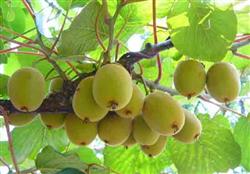
Winter Pest and Disease Control Methods for Kiwifruit Orchards
As the cultivated area and fruiting area of kiwifruit continue to expand, the occurrence and damage of pests and diseases are becoming increasingly serious. Winter pest and disease control in kiwifruit orchards can achieve twice the result with half the effort in promoting tree vigor transformation, pest and disease control in spring and summer, and the healthy growth of kiwifruit trees. According to surveys conducted by our station in recent years, the main diseases found so far...
-
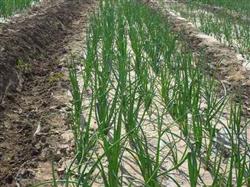
What are the spring disease control measures for onions?
1. Fertilizing and making beds: Choose a plot that faces the sun and is warm, with loose and fertile soil that can be both irrigated and drained, to build the seedling bed. The bed surface should be 1.2-1.5 m wide, and the length varies by location. Apply 5-6 kg of decomposed farmyard manure per sq m in the bed, and at the same time add 60-80 g of compound fertilizer. Mix the soil and fertilizer in the bed evenly and break it up fine, take out the covering soil, rake it level and wait to sow. ...
条件筛选