What are the control methods for zucchini soft rot?
Zucchini soft rot mainly damages the root and stem parts and the fruit (the zucchini itself). During the fruiting stage, the stems and the base of the leaf stalks first become water-soaked; especially at natural cracks or wounds on the root and stem, they gradually soften, the diseased part becomes sunken, and the internal tissue rots, forming a grayish-brown viscous substance with a foul odor. The water in the affected part evaporates,...
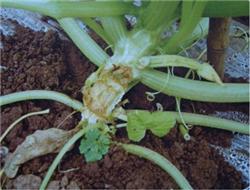
Zucchini soft rot mainly damages the root and stem parts and the fruit (the zucchini itself). During the fruiting stage, the stems and the base of the leaf stalks first become water-soaked; especially at natural cracks or wounds on the root and stem, they gradually soften, the diseased part becomes sunken, and the internal tissue rots, forming a grayish-brown viscous substance with a foul odor. The water in the affected part evaporates and the tissue shrinks and dries.
The pathogen overwinters in the soil. Zucchini soft rot in protected cultivation is generally caused mainly by the soft rot pathogen of Chinese cabbage (Brassica rapa subsp. pekinensis). The pathogen spreads through rain, irrigation water and insects, and can only invade through wounds. After invasion, the pathogen secretes pectinase, which dissolves the middle lamella, causing the cells to break apart, leading to leakage of water from the cells and causing rot. High temperature, high humidity, pruning and thinning on rainy days or before the dew has dried, and damage to leaves from farm operations and insect injury mostly trigger infection by the pathogen, leading to the occurrence of zucchini soft rot. The control methods are as follows:
Select resistant varieties. Different regions should choose and plant appropriate resistant varieties according to the local disease characteristics of zucchini in protected cultivation.
Agricultural control measures
1. Avoid continuous cropping with cabbage-type vegetables; the previous crop is best chosen as alliums or solanaceous and fruiting vegetables.
2. Before land preparation, the soil must be disinfected with quicklime or potassium permanganate. The amount of quicklime is 50-100 kg per 667 sq m, and the amount of potassium permanganate is 2-2.5 kg.
3. Grafting for seedling raising. Use figleaf gourd (Cucurbita ficifolia) as the rootstock for grafting cultivation, which promotes a strong root system, improves low-temperature tolerance, and enhances disease resistance.
4. Use high-ridge cultivation covered with plastic film.
5. Apply nitrogen fertilizer reasonably and increase the application of phosphorus and potassium fertilizers.
6. Pay attention to irrigation; where conditions permit, use drip irrigation under the film, avoid flood irrigation, drain promptly after rain, and avoid waterlogging in the field;
7. Strengthen the control of other diseases and pests; throughout the entire growth period, focus on controlling the damage from whiteflies and aphids.
8. Farm operations should be done carefully to avoid mechanical injury. The row spacing can be appropriately increased and the plant spacing reduced, which is conducive to field operations.
9. Remove diseased zucchini promptly when found and bury them deeply; spread quicklime on the diseased zucchini for disinfection.
Chemical control: Apply chemicals preventively when zucchini is transplanted and before pruning and thinning; starting at the early stage of soft rot onset, choose 72% agricultural streptomycin, etc., for spraying, alternating sprays once every 7 days, for 2-3 consecutive treatments.