Key recent management focus for zucchini: controlling excessive vigor
Recently, when visiting the countryside, I saw that the zucchini grown in greenhouses by vegetable farmers was generally growing too vigorously, and the plants were setting fruit poorly. When asked why, many vegetable farmers told the reporter: "The weather forecast earlier said this year would be a cold winter, so we thought temperature control alone would be enough to manage plant growth well and avoid excessive vegetative growth. If we also used plant growth regulators, it would very likely seriously affect the growth of the zucchini, so we did not use regulators. But unexpectedly, although the outdoor temperature this year was not high, the weather was clear and fine, and the temperature inside the greenhouse was relatively high, which caused severe excessive growth of the zucchini."
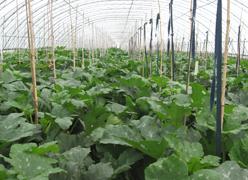
Recently, when visiting the countryside, I saw that the zucchini grown in greenhouses by vegetable farmers was generally growing too vigorously, and the plants were setting fruit poorly.
When asked why, many vegetable farmers told the reporter: "The weather forecast earlier said this year would be a cold winter, so we thought temperature control alone would be enough to manage plant growth well and avoid excessive vegetative growth. If we also used plant growth regulators, it would very likely seriously affect the growth of the zucchini, so we did not use regulators. But unexpectedly, although the outdoor temperature this year was not high, the weather was clear and fine, and the temperature inside the greenhouse was relatively high, which caused severe excessive growth of the zucchini."
So, how do you judge whether zucchini is growing excessively, and when is it more appropriate to take measures to control excessive vigor? To judge whether zucchini will grow excessively later, you should mainly observe the two or three leaves near the plant's growing point. When vegetable farmers find that the two new leaves around the zucchini growing point are fairly spread out, at an appropriate angle of opening from the main stem, and at the same growth height as the surrounding older leaves, with the leaves slightly yellowing and showing relatively strong growth, it indicates that the plant is growing normally. When the plant's growing point shows three leaves and one heart, or the two leaves around the growing point have a small angle of opening from the main stem and the new leaves are noticeably taller than the surrounding older leaves, it indicates that the plant has started growing excessively. Therefore, vegetable farmers should take measures as soon as the growing point first shows signs of excessive growth.
Controlling excessive plant growth should be based on temperature and humidity control, combined with the action of plant growth regulators. There are many chemicals that can inhibit excessive growth in zucchini, such as chlormequat, zhuzhuangsu, and paclobutrazol, but the one with the best effect is paclobutrazol.
Vegetable farmers can mix 6 grams of 15% paclobutrazol per bucket of water and spray it evenly on the middle and lower leaves of the plants. Never spray the solution onto the upper leaves of the plants, to prevent phytotoxicity and severely inhibit plant growth. If the solution is to be sprayed on the middle and upper leaves of the plants, the amount of paclobutrazol used can be reduced to 2 grams, and each bucket of solution can spray 550-650 plants. Vegetable farmers must be sure to watch the weather forecast to ensure that there are more than 3 sunny days after spraying, to prevent phytotoxicity, excessive vigor control, and effects on normal plant growth.