-
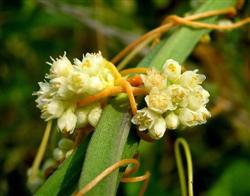
How to control dodder (Cuscuta) on lychee and longan
Dodder has no roots and no leaves, but its stem bears serrated haustoria (or sucking roots), which it uses to penetrate deep into the bark to absorb nutrients, affecting the growth of the fruit seedlings; in severe cases it can cause the seedlings to wither and die. It is more commonly seen in mature lychee orchards in mountainous areas. Dodder can flower and set seed; the flowers are small and white, and the fruit drops to the ground on its own after ripening...
-
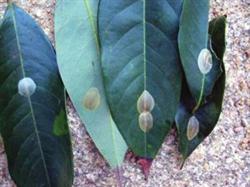
A Detailed Guide to the Key Points of Litchi Fruit Borer Control Techniques
The litchi fruit borer is a major pest of longan and litchi. Its larvae bore into and damage tender shoots, flower clusters and fruit. Damage during the young fruit stage causes severe fruit drop, and damage at maturity leaves the fruit stalk filled with insect frass, affecting quality. When tender shoots and flower clusters are damaged, their tips wither, affecting new shoot growth and the following year's flowering and fruiting. This pest occurs in southern Fujian...
-
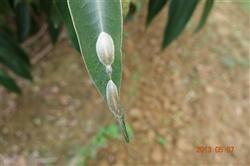
Symptom Identification and Control Techniques for the Litchi Fruit Borer
The litchi fruit borer is a major pest of longan and litchi. Its larvae bore into tender shoots, flower clusters and fruits. Damage during the young fruit stage causes severe fruit drop, while damage at maturity leaves the fruit stalk filled with insect frass, affecting quality. When tender shoots and flower clusters are damaged, their tips wither, affecting new shoot growth and flowering and fruiting the following year. This pest occurs in southern Fujian...
-

Detailed Guide to Identifying and Controlling Common Hawthorn Diseases
Common Hawthorn Diseases and Their Control
-
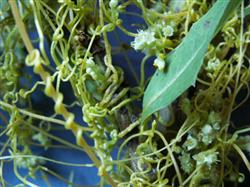
Control Methods for Three Major Soybean Diseases
What does soybean dodder look like? What should you do if soybean dodder appears? Dodder, also called yellow silk vine or tangled silk vine, is a malignant weed. It harms many crops, can cause total loss of soybean yield, and occurs commonly in various regions. (1) Morphology: The stem of soybean dodder is yellow, orange-yellow, or yellow-green, smooth and hairless,...
-
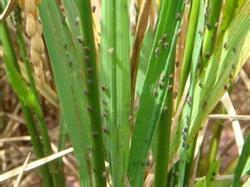
Detailed Explanation of Rice Pest and Disease Identification and Control Methods (Part 2)
The brown planthopper, also known as the brown rice planthopper, is commonly called roundworm, soft-shell roundworm, spindle worm, or midge. Scientific name Nilaparvata lugens (Stal), order Homoptera, family Delphacidae. The brown planthopper is one of the main pests on rice in China, causing damage in all major rice-growing regions across the north and south of the country. Every year it occurs and causes damage mixed with the white-backed planthopper, and the two planthoppers do not...
-

What are the causes of stiff seedlings in rapeseed and the control methods?
Causes of stiff seedlings in rapeseed and control methods
-
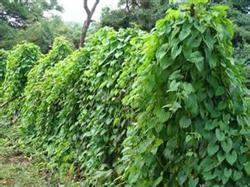
Yam Pest and Disease Control Methods and Key Technical Points
I. Anthracnose. Yams are prone to anthracnose during hot, rainy seasons, and after onset it causes stem blight and leaf drop. In the early stage, black spots appear on the leaves; in the later stage, the leaf color turns black, and the lesions become water-soaked; in severe cases it affects plant growth and causes reduced yield. Control: In the early stage of the disease, spray once every 7 days with 50% Tuzet 600x solution, or 7...
-
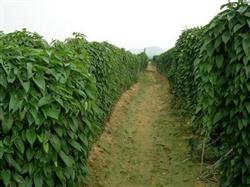
Key Technical Points for Integrated Pest and Disease Control in Chinese Yam
I. Agricultural Control 1. Selecting disease-resistant varieties is an effective method for controlling Chinese yam pests and diseases. When cultivating disease-resistant varieties, rational layout is necessary, rotating varieties every 2 to 3 years, and attention should be paid to variety purification and rejuvenation. 2. Crop rotation can reduce or avoid damage from Chinese yam stem rot and root-knot nematodes. Rotate at least once every 3 years with crops that are not infected, such as corn (2343, -3.00, -0.13%), wheat, radish, and watermelon; in old areas where Chinese yam is cultivated year-round, rotate once every year; where conditions permit, paddy-upland rotation can be implemented for better control results.
-
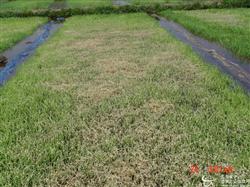
Diagnosis and Control Methods of Rice Seedling Rot: A Detailed Guide
Rice seedling rot is a general term for seed rot, bud rot and seedling death in rice caused by pathogen infection or non-pathogenic factors. It can be divided into two categories: infectious and non-infectious (physiological). Non-infectious seedling rot is mainly caused by adverse environmental conditions; infectious seedling rot refers to that caused by adverse environmental conditions inducing infection by Pythium, Achlya, Fusarium and other pathogens...
条件筛选