What are the spring disease control measures for onions?
1. Fertilizing and making beds: Choose a plot that faces the sun and is warm, with loose and fertile soil that can be both irrigated and drained, to build the seedling bed. The bed surface should be 1.2-1.5 m wide, and the length varies by location. Apply 5-6 kg of decomposed farmyard manure per sq m in the bed, and at the same time add 60-80 g of compound fertilizer. Mix the soil and fertilizer in the bed evenly and break it up fine, take out the covering soil, rake it level and wait to sow. ...
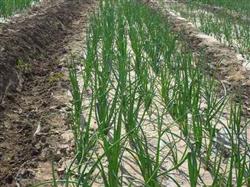 When onions are harvested, bulb rot often occurs. The following control measures should be taken in spring:
Rot caused by diseases The diseases that often occur in onions are: soft rot (bacterial disease) and stem rot (fungal disease).
Control methods: ① Pay attention to crop rotation, and avoid continuous cropping with onion and garlic crops. Deep plow the cultivation site as much as possible to 30 cm. If a rotary tiller is used, spray a no-deep-plowing agent before planting, which is beneficial to root growth and development and improves plant disease resistance. ② Apply decomposed fertilizer to prevent the fertilizer from carrying pathogens. ③ Use ridge planting as much as possible. ④ Control the amount of nitrogen fertilizer applied during the growing period, and fertilization should be combined with nitrogen, phosphorus and potassium. ⑤ Pay attention to timely drainage during the bulb formation stage to avoid long-term waterlogging. ⑥ Control insect pests in time to avoid causing wounds. ⑦ Before disease onset, use the following agents: 72% agricultural streptomycin 4000-fold solution, 50% copper bis(dodecylbenzenesulfonate) wettable powder 500-fold solution and 72% 0 ke lu wettable powder 600-fold solution, 405 Fuxing emulsifiable concentrate 8000-fold solution alternately sprayed.
Rot caused by insect pests The wounds caused by underground pests such as cutworms, wireworms and root maggots damaging onions easily allow mold to invade and cause rot, and can also cause infectious diseases to occur.
In addition to irrigation with chemicals for control, in late April to early May, pesticides such as Wanling and Anda should be sprayed in the field to control the damage of adult insects.
Rot caused by nutrient deficiency Because the ground temperature is low in early spring, ammonium nitrogen accumulates too much in the soil, affecting the absorption of elements such as calcium, potassium and magnesium, causing physiological diseases due to the lack of the above fertilizer elements. Applying too much nitrogen fertilizer during the growing period will also cause a deficiency of the above elements. Due to the lack of the above elements, the leaf margins lose green and the leaf tips dry up, and at the same time the outer and inner scales of the bulb also dry up and rot.
Control methods During cultivation, attention should be paid to the combined application of nitrogen, phosphorus and potassium. During the growing period, high-energy red potassium and 0.2% calcium nitrate solution can be applied as a foliar topdressing to supplement potassium and calcium elements.
Rot caused by rain and standing water In the late growth stage of onions, the leaf sheaths loosen and the gaps are relatively large. Excessive standing water in the field will soak into the leaf sheaths of lodged plants, and rainwater will soak into the leaf sheaths of non-lodged plants, both of which will cause bulb rot.
Control methods Attention should be paid to drainage, and harvesting should be done early.