What are the control methods for zucchini cottony leak?
Disease characteristics: Zucchini cottony leak mainly damages the fruit, and sometimes damages leaves, stems and other parts. When leaves are affected, dark green, round or irregular water-soaked lesions first appear, and under high humidity they look as if scalded by boiling water. When fruit is affected, oval, water-soaked dark green lesions first appear. Under dry air conditions, the lesions turn...
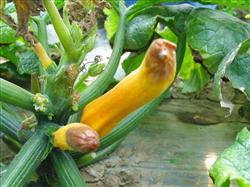
Disease characteristics:
Zucchini cottony leak mainly damages the fruit, and sometimes damages leaves, stems and other parts. When leaves are affected, dark green, round or irregular water-soaked lesions first appear, and under high humidity they look as if scalded by boiling water. When fruit is affected, oval, water-soaked dark green lesions first appear. Under dry air conditions, the lesions turn brown, slightly sunken, the flesh beneath the skin rots, and a white mold layer forms on the surface.
Disease pattern:
Zucchini cottony leak is caused by fungal infection. The pathogen overwinters in the soil. In the following spring, when suitable conditions occur, it germinates, invades the plant through the stems, leaves and fruit epidermis, and spreads via rainwater or irrigation water to damage the fruit. The pathogen is mainly distributed in the topsoil. After rain or under high humidity, the pathogen multiplies rapidly. Low soil temperature and high humidity favor the disease.
Control methods:
(1) Use high-ridge cultivation, water reasonably, avoid flooding irrigation, and drain promptly after heavy rain. After fruit set, the fruit can be propped up to prevent moisture and infection. (2) Avoid excessive application of nitrogen fertilizer, and appropriately increase potassium fertilizer. Increase antagonistic bacteria in the soil to inhibit the growth of the pathogen and reduce damage, and remove diseased fruit promptly when found. (3) Chemical control: In the early stage of the disease, choose 50% Rongjunling wettable powder at 800 times dilution, or 10% Baolian wettable powder at 800-1000 times dilution for spraying.