What Are the Symptoms of Phosphorus Deficiency in Peach Trees? Detailed Guide to Prevention and Control Methods
I. The Role of Phosphorus in the Growth and Development of Peach Trees Phosphorus has two roles in the growth and development of peach trees. On one hand, it can strengthen tree vigor, maintain healthy tree growth, promote flower formation, lead to earlier fruiting, promote the maturation of fruit and seeds, increase sugar content, and improve fruit quality. On the other hand, it can enhance the peach tree's adaptability to the external environment...
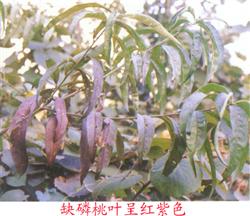
I. The Role of Phosphorus in the Growth and Development of Peach Trees Phosphorus has two roles in the growth and development of peach trees. On one hand, it can strengthen tree vigor, maintain healthy tree growth, promote flower formation, lead to earlier fruiting, promote the maturation of fruit and seeds, increase sugar content, and improve fruit quality. On the other hand, it can improve the peach tree's adaptability to the external environment, enhance the root system's absorption function, promote root growth, and improve the fruit tree's drought resistance, cold resistance, and disease resistance.
II. Symptoms of Phosphorus Deficiency When a peach tree is deficient in phosphorus, it shows relatively slow plant growth, thin and upright branches, thin and brittle leaves, delayed fruit ripening period, small fruit, dull coloring, low sugar content, and poor fruit quality. It occurs in July-August, first appearing on the leaves in the middle of the new shoots, then gradually developing toward the upper part. The leaves become smaller and slender, and the leaf color turns dark green or grayish green with no luster. The petiole or the leaf veins on the back of the leaf turn reddish brown or purplish red, and in severe cases the entire leaf turns purplish red. After September, the leaves gradually wither and fall off, and because nutrient accumulation is insufficient, the quality of flower buds for that year is affected. Specifically, the flower buds are thin and weak, the time of flowering and leaf unfolding in the second year is delayed, and the fruit setting rate is low.
III. Conditions for Occurrence 1. In alkaline soil or soil containing a large amount of lime, phosphorus is easily fixed and cannot be directly absorbed by fruit trees. 2. Orchards where nitrogen fertilizer is applied excessively and phosphate fertilizer is applied too little. 3. In soil that has not been matured through cultivation for many years and where little organic fertilizer has been used.
IV. Prevention and Control Methods 1. After harvesting fruit in autumn, on the basis of applying organic fertilizer, focus on applying inorganic fertilizer or phosphorus-containing compound fertilizer. When applying phosphate fertilizer, pay attention to the proportional relationship between nitrogen fertilizer and potassium fertilizer, and use formula fertilization. 2. During the growing season, spray phosphate fertilizer on the leaves, such as a 0.2%-0.3% aqueous solution of potassium dihydrogen phosphate.