Technical Guidance on Early Spring Pest and Disease Control for Peach Trees
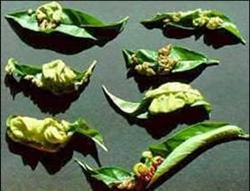
Peach leaf curl mainly damages leaves, but can also harm young shoots and young fruit. It generally occurs from April to May and happens only once a year. When fruit is affected, it turns red, the diseased part swells, the fuzz falls off, and the surface becomes smooth. For agricultural control, select high-yield, high-quality, disease-resistant varieties. In peach orchards that have entered the fruiting stage, manage the soil and fertilizer well...
 As the early spring weather gradually warms up, various peach tree pests and diseases begin to revive, breed, and multiply. Early spring control of peach tree pests and diseases can effectively control the occurrence and spread of many peach tree diseases and reduce the base population of pests. The occurrence and damage of the main peach tree pests and diseases and their early spring control recommendations are briefly introduced as follows:
1. Peach anthracnose
Occurrence and damage: This is the main fungal disease of peach trees in this region. The mycelium overwinters on diseased dead branches and mummified fruit, and in early spring of the following year produces spores that infect fruiting branches, then gradually spread to flowers and fruit, worsening the damage. In severe cases, a large number of fruiting branches die and large amounts of fruit rot. In the Shanghai area, there are 3 disease processes in a year, found respectively on fruiting branches from mid-March to early April; on young fruit in early to mid-May; and on fruit during the ripening stage in June and July. Damage is most severe during the young fruit stage throughout the year.
Early spring control methods: (1) Prune off dead branches, mummified fruit, and stub remains on the tree, or the first diseased branches from bud break to around flowering, to eliminate overwintering sources of disease and prevent re-infection; (2) Strengthen drainage, increase the application of phosphorus and potassium fertilizers, strengthen tree vigor, and avoid leaving branches too dense or too long; (3) When peach buds break, spray 1-2 times with 1:1:100 Bordeaux mixture (do not use after leaf expansion).
2. Peach bacterial shot hole
Occurrence and damage: This is a bacterial disease that overwinters on diseased shoots. In the following spring, bacterial ooze exudes from the diseased parts and is spread by wind, rain, and insects. It invades through stomata, lenticels, and other openings. It generally appears after leaf expansion in mid-April. The plum rain season in May-June and the typhoon season in August-September are the peak periods of disease occurrence throughout the year. It mainly damages peach leaves and fruit, causing leaf shot holes and defoliation and fruit cracking.
Early spring control methods are the same as for peach anthracnose.
3. Peach crown gall
Occurrence and damage: This is a bacterial disease that mainly damages the roots and root crown, forming tumors, causing severely poor growth of peach trees, stunted plants, few fruit of poor quality, and death of the entire plant in severe cases. The pathogenic bacteria survive in tumor tissue or soil and can spread with rainwater runoff or irrigation water and with diseased nursery stock, invading through wounds.
Early spring control methods: (1) Strengthen soil management, fertilize reasonably, improve the soil, and enhance tree vigor; (2) Strengthen orchard inspections. For suspicious diseased plants, dig away the surface soil, and after discovering the disease, scrape it off with a knife or thoroughly scrape it off and drench the roots with KG84 for disinfection. For severely affected plants, dig them out and burn them.
4. Peach gummosis
Occurrence and damage: This is a physiological disorder of peach trees, mainly occurring on branches and trunks. Gumming can also occur on new shoots, leaves, and fruit, causing the bark of affected branches and trunks to become rough, cracked, and difficult to heal. When gumming is severe, tree vigor weakens, and it easily becomes an egg-laying site for the peach red-necked longhorn beetle, accelerating peach tree death. Gumming can occur throughout the entire growth period of peach trees, but occurs most often in rainy seasons such as the plum rain and typhoon periods, and is more severe in old and weak trees.
Early spring control methods: Strengthen comprehensive management, promote normal growth and development of the tree, and enhance tree vigor.
5. Mulberry white scale
Occurrence and damage: Also known as the mulberry scale insect and peach white scale insect, it is an important pest of peach trees. Fertilized adult females overwinter on branches and trunks, and there are three generations per year in the Shanghai area. Overwintering females begin laying eggs in mid-April, and the occurrence periods of the three generations of nymphs are respectively early to mid-May, early to mid-July, and early to mid-September each year. Female adults and nymphs damage peach new shoots, branches and trunks, and fruit, causing severe weakening of tree vigor, greatly reducing fruit yield and variety quality, and even killing the entire tree.
Early spring control methods: Before bud break, spray 1-2 times with 5 degrees Baume lime sulfur mixture, or 100 times mineral oil emulsion, to kill overwintering adult females. When the insects are densely clustered in patches, before spraying they can be brushed off with a stiff brush and then sprayed, to facilitate penetration of the spray liquid.
6. Peach red-necked longhorn beetle
Occurrence and damage: Commonly known as the saw-tree beetle, it is an important pest of peach trees. Larvae overwinter in damaged parts of branches and trunks, and generally complete one generation in 3 years. Mature larvae pupate in May, adults appear in mid-to-late June, eggs are laid from late June to early July, and larvae begin overwintering in late October. Larvae bore into and feed on the cortex and xylem of peach branches and trunks, weakening tree vigor and shortening lifespan. In severe cases, peach trees die in patches.
Early spring control methods: After locating the damaged parts based on frass and insect feces on branches and the ground, stab the larvae with wire.