What causes deformed strawberries? Causes and key control points explained
First, unsuitable temperature and humidity. Low temperature, high temperature or high humidity can all easily cause deformed fruit. In sunny weather with suitable temperatures, the petals can open very early in the morning, and after a few hours the anthers begin to dehisce, exposing the pollen, during which pollination and fertilization take place. Under low temperature conditions, however, the petals cannot fully open and turn back...
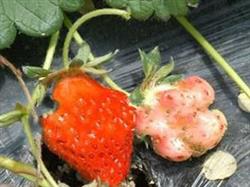
First, unsuitable temperature and humidity. Low temperature, high temperature or high humidity can all easily cause deformed fruit. In sunny weather with suitable temperatures, the petals can open very early in the morning, and after a few hours the anthers begin to dehisce, exposing the pollen, during which pollination and fertilization take place. Under low temperature conditions, however, the petals cannot fully open and turn back, the stamens dehisce poorly, and fertilization is difficult. At the same time, when the air humidity is too high (above 80%), pollination and fertilization are also affected, which is unfavorable for anther dehiscence and pollen development.
Second, improper fertilization. Although strawberries need a large amount of nutrients for growth, applying too much base fertilizer or too much nitrogen fertilizer such as urea during the bud-to-flowering stage will promote excessively vigorous vegetative growth, resulting in few strong buds and many weak buds among the differentiated flower buds, and an imbalance of nutrient elements, thus leading to poor berry development and many deformed fruits.
Third, the light factor. Strawberry pollen is formed within 14 days before flowering. If light is insufficient during this period, the germination rate of the pollen will be reduced, affecting fertilization and producing deformed fruit.
Fourth, spraying during the flowering period. Spraying pesticide during the strawberry flowering period will hinder pollen germination and harm pollinating insects, significantly increasing the proportion of deformed fruit.
To control deformed strawberries, prevention should be the priority. In addition to selecting good varieties and interplanting some varieties with abundant pollen among the main varieties, corresponding measures should also be taken according to the different causes to reduce the probability of deformed fruit occurring.
First, apply fertilizer with a scientific formula. Combine organic fertilizer with inorganic fertilizer, especially apply an appropriate proportion of phosphorus and potassium fertilizer, supplement calcium, boron and other elements in time, and control soil moisture to reduce the plant's ability to absorb nutrients.
Second, regulate humidity and temperature. Strawberries are quite sensitive to temperature and humidity during the flowering period. When the relative humidity is around 40%, the anther dehiscence and germination rates are high, and a temperature within the range of 17°C to 35°C is favorable for pollen activity and dispersal. Therefore, open the vents for ventilation in good time to keep the humidity inside the greenhouse no higher than 40%; the minimum temperature should not be lower than 5°C, and the maximum temperature should not exceed 30°C, with daytime temperatures kept at 25°C to 28°C. In addition, note that after flowering, do not irrigate easily as long as the soil surface is not dry.
Third, carry out the relevant supporting measures well and adopt supplementary pollination techniques. One box of honeybees can be placed in the greenhouse to increase the chance of pollination, and hand pollination can also be done. From 10 a.m. to 3 p.m. every day is the peak period of anther dehiscence; during this period, use artificial gentle wind to assist pollination, such as walking quickly along the aisle or fanning with a fan.
Fourth, choose high-efficiency, low-toxicity pesticides, and strictly prohibit the use of pesticides during the flowering period. Before strawberry flowering, diseases should be thoroughly controlled; after flowering, promptly pull out diseased plants and remove diseased leaves and inflorescences to control the spread of disease and avoid pest and disease control during the flowering period. If control is necessary, smoke agents can be used instead.
Fifth, thin flowers and fruits in time. Regularly thin out old leaves and ineffective axillary buds, and remove severely misshapen young deformed fruits, so as to improve light conditions for the normal growth of strawberries, help concentrate nutrient supply, and increase fruit weight and fruit quality.