Detailed Guide to Identifying and Controlling Phytophthora Blight in Peppers
Control methods: 1. Phytophthora blight in peppers mainly damages leaves, fruits and stems, and is most likely to occur at the base of the stem. When the disease occurs at the seedling stage, infection mostly starts from the base of the stem; the affected part shows water-soaked soft rot, the lesion is dark green, and the plant lodges above the diseased part. Control methods: 1. Practice crop rotation and deep plowing to improve the soil, and combine...
Control methods: 1. Practice
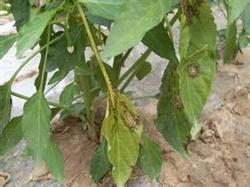
Phytophthora blight in peppers mainly damages leaves, fruits and stems, and is most likely to occur at the base of the stem. When the disease occurs at the seedling stage, infection mostly starts from the base of the stem; the affected part shows water-soaked soft rot, the lesion is dark green, and the plant lodges above the diseased part.
Control methods:
1. Practice crop rotation, deep plowing to improve the soil, and in combination with deep plowing, apply more organic fertilizer, phosphorus and potassium fertilizer and micronutrient fertilizer, apply nitrogen fertilizer in moderation, and improve soil structure.
2. Select disease-resistant varieties, strictly disinfect seeds, and raise sterile, strong seedlings; 7 days before transplanting and on the day of transplanting, carefully spray a fungicidal protectant twice, respectively, to ensure clean seedlings enter the greenhouse and reduce disease occurrence.
3. Observe carefully. If a small number of diseased leaves or fruits are found, remove them immediately and bury them deep; if disease is found on the stem, immediately smear the lesion with a 200-fold dilution of 70% mancozeb solution to eradicate the pathogen.
4. Chemical control: Before transplanting, carry out proper soil disinfection; in combination with plowing, spray chemicals such as hymexazol, dexon and metalaxyl to kill residual pathogens in the soil. If the disease has already occurred, spray chemicals such as Anke and Fushuaide, and these can also be used together with foliar sprays of monopotassium phosphate and Bihu to improve the plant's own disease resistance.