How to prevent and control pepper (bell pepper) seedling death
The problem of pepper plant death gives vegetable growers a real headache, especially in greenhouses with more than 3 years of continuous cropping, as there are not a few cases where plant death leads to reduced or total loss of yield. Right now is the critical period for raising and transplanting pepper seedlings, and it is also the key stage for preventing plant death. Preventing plant death at this key point is much more effective than drenching roots to prevent plant death during the full fruit stage...
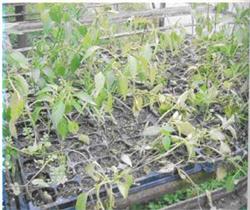
The problem of pepper plant death gives vegetable growers a real headache, especially in greenhouses with more than 3 years of continuous cropping, as there are not a few cases where plant death leads to reduced or total loss of yield. Right now is the critical period for raising and transplanting pepper seedlings, and it is also the key stage for preventing plant death. Preventing plant death at this key point is much more effective than drenching roots to prevent plant death during the full fruit stage, with costs lower by more than 50% and losses much smaller as well.
There are many causes of pepper plant death. Besides excessive fertilizer burning the roots and excessive water waterlogging the roots, Phytophthora blight, stem base rot and root rot at the seedling stage are all major causes of plant death, and these diseases are collectively known as soilborne diseases. In production, some cases involve a single disease and some involve mixed infections, among which root rot is the main cause of plant death. There are several types of pepper root rot, including Phytophthora root rot, Pythium root rot and Fusarium root rot. When all three types of root rot occur at the same time, control with a single fungicide is very difficult to achieve.
The sources of inoculum for all these soilborne diseases come from diseased plant residues, water flow and unclean organic manure. The pathogens survive and overwinter in the soil, and when temperature and humidity are suitable, they infect and spread to pepper hosts and cause plant death. These pathogens survive in the soil for a long time and accumulate in the soil year by year with continuous cropping, so in greenhouses with many years of continuous cropping, plant death is especially severe.
At present, the methods for controlling pepper plant death include the following: 1. Soil fumigation and disinfection; that is, treating the soil with methyl bromide, dazomet or metam sodium. It is characterized by thorough sterilization and disinfection, but the operation is complicated, the cost is high and it takes a long time. 2. Hot water soil scalding disinfection; most foreign countries use this method, but because the cost is too high, it is not suitable for our current national conditions. 3. High-temperature greenhouse sealing plus calcium cyanamide method; the method is simple and easy to carry out and the cost is relatively low, but the sterilization effect is rather poor. 4. Microbial agent method; the effect is still acceptable on new soil or virgin land, but the effect on preventing plant death in old greenhouses with continuous cropping is not ideal. 5. Grafting technology; grafting with wild pepper as rootstock can achieve a control effect of more than 95%, a technology with broad prospects, but at present the technical operation is relatively difficult and the cost is relatively high. 6. Conventional chemical treatment; that is, using 1 packet of Amisco per barrel of water plus 50 grams of Jinlei. When transplanting and planting, first dip the seedling tray once, then spray the same fungicide solution into the planting holes, and then transplant. This method can ensure that no plant death occurs before the early fruit stage. By the full fruit stage, the same method can be used to drench the roots 1-2 times. The advantage of this method lies in being simple and easy to carry out, with good effect and low cost.
In preventing and controlling pepper plant death, grasping "early" and taking the initiative are very important. The above methods for controlling pepper plant death each have advantages and disadvantages. Conditions vary greatly from place to place and from household to household, so methods for controlling plant death should be selected according to local conditions and actual circumstances.