-
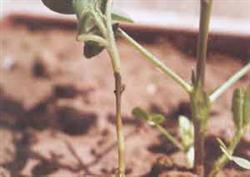
How to prevent and control peanut southern blight? Detailed practical methods
Peanut southern blight generally begins to occur in large numbers in early to mid-June. Comprehensive control measures are as follows: for lower-lying fields, dig good ditches to help drain standing water and lower the water table; sloping peanut fields should also have good ditches so that water does not accumulate after rain. Apply more calcium and potassium fertilizer. After the initial flowering stage, in combination with building up soil and hilling the beds, apply 40-5...
-
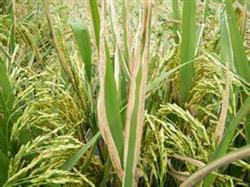
Detailed Explanation of the Causes and Control Techniques of Rice Bacterial Leaf Blight
The pathogen of rice bacterial leaf blight is Xanthomonas oryzae, a bacterium belonging to the genus Xanthomonas. Bacterial leaf blight is one of the major diseases of rice. Once it occurs, it generally reduces yield by 10%, and in severe cases by 50-60%. Therefore, strengthening the control of bacterial leaf blight is very important. 1. Causes of the disease 1.1 Relationship between disease occurrence and climatic conditions...
-
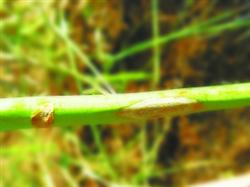
Detailed Guide to Symptom Identification and Control Methods for Asparagus Stem Blight
Asparagus is a valuable vegetable with excellent taste and quality. With the continuous improvement of people's living standards, the demand for asparagus in domestic and international markets is growing. Because asparagus has strong drought tolerance, it is particularly suitable for cultivation in the Tianjin area. However, as the number of planting years increases and the area expands, the occurrence of stem blight becomes more and more severe, with some fields...
-
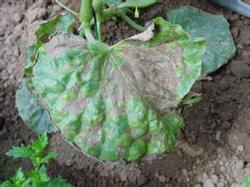
How to treat bacterial leaf blight in greenhouse melons? Detailed control methods
This disease is a bacterial disease that mainly damages leaves, petioles and young melons, and can cause damage throughout the entire growth period. When infected at the seedling stage, the cotyledons show water-soaked yellow sunken spots. When leaves are infected, the early stage shows light green water-soaked spots on the underside of the leaves, and gradually the leaf surface turns into light brown necrotic lesions. After drying, the lesion area becomes brittle and perforated. To prevent this disease...
-
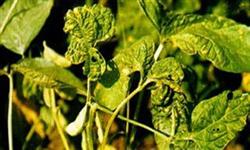
How to prevent and control soybean bud blight? A full breakdown of practical methods
Soybean bud blight, also called bud rot, is one of the soybean viral diseases with a relatively large impact on yield. Depending on the stage at which it occurs, losses range from 25% to 100%. In 1962 in China, similar symptoms appeared on foreign varieties introduced in Shandong Province, and afterward the disease occurred in Hebei, Beijing, Liaoning, Jilin, Heilongjiang and other places...
-
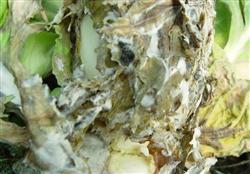
What are the control methods for downy blight (Phytophthora rot) in cabbage and cauliflower?
This spring has seen a lot of low-temperature and rainy weather, making cabbage prone to sclerotinia rot, so check and treat it early. When sclerotinia rot occurs at the cabbage seedling stage, water-soaked light brown lesions appear on the leaves with indistinct edges, and the diseased tissue soft-rots, causing damping-off. When plants are affected during the head-forming stage, water-soaked sunken lesions form on the leaves near the ground and on the root crown, initially appearing...
-
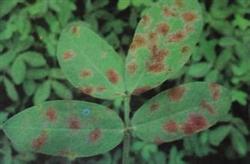
How to identify peanut leaf blight? A simple method anyone can understand at a glance
Peanut web blotch, also known as cloud-pattern blotch or net-blotch, was first discovered in the United States in the mid-1940s. In the late 1970s, China's Liaoning Province reported the occurrence and damage of this disease for the first time. In recent years, the disease has been fairly common in production areas in northern China, with relatively severe damage, generally reducing yield by about 20%, and in severe cases reducing yield by 4...
-
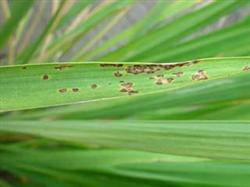
Identification Methods and Control Techniques for Rice Sheath Blight in Water Bamboo
[Symptom Characteristics] Water bamboo blast, also known as water bamboo gray heart disease, mainly infects the leaves. Leaf lesions fall into 3 types: acute, chronic and brown spot. Acute-type lesions are round-dot shaped, dark green, with a grayish-green mold layer (conidiophores and conidia) on the back of the lesion that is relatively obvious; their appearance is a precursor to a water bamboo blast epidemic. Chronic-type lesions are nearly spindle-shaped, ...
-
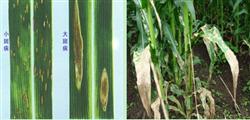
Control Techniques for Northern Corn Leaf Blight and Southern Corn Leaf Blight
Northern corn leaf blight and southern corn leaf blight mainly damage the leaves, and sometimes also infect the leaf sheaths and husks; southern corn leaf blight, in addition to damaging the above parts, can also damage the ear. In many regions these two diseases are collectively called "corn leaf blight." 1. Symptom identification: The typical symptom of northern corn leaf blight is that small lesions rapidly expand into large elongated spindle-shaped spots...
-
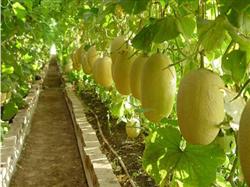
Integrated Control Measures for Gummy Stem Blight of Hami Melon in Rainy Regions
I. Bacterial Leaf Spot Symptoms: In the early stage, water-soaked lesions appear near the veins on the underside of leaves; the lesions expand rapidly and merge into one another, with a yellow halo at the edges. Control method: In the early stage of the disease, spray the foliage 2-3 times with 77% Duoning at 500 times dilution or 3% zhongshengmycin at 800 times dilution, once every 4-5 days. II. Gummy Stem Blight Symptoms...
条件筛选