-
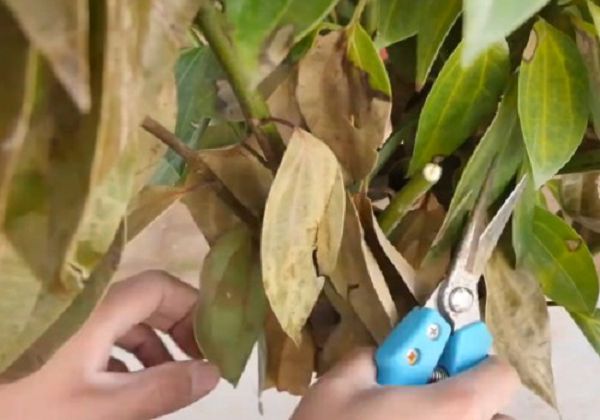
How to treat twig blight on the Peace Lily tree? A full breakdown of prevention and control methods
How to treat twig blight on the Peace Lily tree
-

How to prevent and treat tulip leaf blight? A few practical methods to teach you
Symptoms: Infected leaf buds develop poorly, appearing deformed and curled; once young buds are affected, the leaves that grow from them become curled. If the environment is humid, a large number of gray mold-like conidia are produced on the diseased tissue, spreading to nearby healthy plants and causing leaf infection, so bulb growth is greatly affected. After flowers are affected, white or light yellowish-brown lesions first appear, then rapidly expand and cause the flowers to wither and drop, or turn brown and dry up. Ring-like bands also appear on the flower stalk, sometimes with a layer of conidia on them. At every stage of the disease
-
Symptoms and control methods of tulip southern blight
Symptoms: The whole plant wilts, with white mycelial strands or rapeseed-like tan-brown small sclerotia wrapped around the stem base, and the affected parts turn brown, rot and decay. Large amounts of white mycelial strands and tan-brown fungal bodies are visible on the soil surface. Pathogen: Sclerotium rolfsii Sacc., called southern blight, belongs to the Deuteromycotina fungi. The hyphae are white and silky, spreading in a fan-like or radial pattern, then gathering into mycelial strands or tangling into sclerotia. The sclerotia resemble rapeseeds, initially white to yellowish-white, later turning tan-brown, round, with a smooth surface. In addition, it has been reported that Corticium rolfsii
-
Identification and Control Methods for Southern Blight in Carnations
[Distribution]Shanghai, Hangzhou. [Symptoms]The disease occurs at the base of the stem near the soil surface, turning brown and rotting; when the diseased stem tissue is cut open, a tea-brown or dark brown rot develops from the outside toward the center; the xylem also discolors upward, and white mycelium growing in a feathery, radiating pattern can spread to the surrounding soil surface; afterward, on the diseased area and the surrounding soil surface mycelium, sclerotia form that are initially white and later turn yellow-brown, the size of rapeseeds; after a plant is infected, it usually collapses and dies as a whole. On cutting beds, wet rot begins at the callus formation area of the cuttings and can also cause severe root
-
What are the control methods for southern blight in jasmine?
Jasmine southern blight is the most serious disease of jasmine. When the disease is severe, it causes the plants to wither and die, greatly affecting yield. [Distribution] Suzhou, Hangzhou, Shanghai, Nanjing, Fuzhou, Taiwan, China. [Symptoms] The disease occurs at the root crown and roots, and under suitable conditions can spread to the lower leaves. The root crown area turns brown and rots, gradually spreading and expanding, producing a white silky film, mostly radiating outward, especially noticeable at the edges. The silky mycelium can spread to the soil near the root crown, and in severe cases the entire pot of soil is filled with white mycelium, which
-
Symptom Identification and Control Methods for Hydrangea Bud Blight
Hydrangea bud blight is also known as hydrangea gray mold. It damages the buds and flowers of the plant. Symptoms: In field-grown plants, it easily occurs in dense spherical flower clusters, causing them to develop water-soaked rot. In greenhouse cultivation, buds are prone to turning black and withering. Pathogen: The pathogen is Botrytis cinerea Pers., belonging to the Deuteromycotina, Hyphomycetes, Moniliales, genus Botrytis. Disease pattern: The pathogen overwinters as mycelium in diseased plant debris. In the following spring, it produces conidia
-
Occurrence Patterns and Control Methods of Lily Leaf Blight
Lilies originate from the eastern and central regions of China. They are relatively cold-tolerant, prefer strong light, and do not tolerate shade. Insufficient light will affect growth and flowering. A well-drained sandy loam rich in organic matter is suitable. Their disease resistance is poor, and they are susceptible to disease under high temperature and high humidity conditions. Lily plants are upright and elegant, with large, brightly colored flowers and many varieties. They are suitable for planting in patches or clumps at the edges of lawns or for forming flower borders, creating a quiet and harmonious effect. Lilies are also treasures for potted flowers and cut flowers. Lily leaf blight, also known as lily gray mold, affects the plant's photosynthesis, hinders growth, and reduces ornamental value. When the disease occurs severely,
-
Lily Leaf Blight: Control Methods and Key Technical Points
Symptoms: Circular or oval lesions form on the leaves, varying in size, with a length of 2 to 10 mm or more. They range from pale yellow to light brown. In some varieties, the spots are light brown, surrounded by a distinct reddish-purple margin, and under humid conditions the spots quickly become covered with a layer of gray mold. When dry, the lesions become thin, easily crumble, are transparent, and generally appear grayish-white. In severe cases, the entire leaf dies. When the stem is infected, it rots and breaks at the point of infection, and the buds turn brown and rot. Spots on the flowers are brown and, when moist, quickly become a sticky mass covered with a gray
-
Symptom Identification and Control Methods of Lily Blight
Blight is an important disease of lilies, widely distributed, occurring mostly in the south, with occasional outbreaks in protected cultivation in the north. Usually 5%-10% of plants are diseased, affecting lily production to a certain extent; in severe cases it can reach over 30%, causing plants to die in patches and significantly affecting lily yield and quality. Symptoms: This disease can infect all parts of the lily. When the stem is infected, it initially shows water-soaked light brown to greenish-brown rot, gradually spreading upward and downward, causing the plant to wither and die or topple. When leaves are infected, small water-soaked spots initially appear, later developing into grayish-green to dark green large spots, ultimately causing
-
What are the control methods for lily blight?
Symptoms: The entire plant (including flowers, leaves, stems, stem base, bulbs, and roots) can be affected. Infected flowers wither and fade, with white mold growing on them; leaves initially show water-soaked spots, then wither; stem and stem base tissues initially show water-soaked spots, then turn brown, necrose, and constrict, with all parts above the infected area completely withering. Bulbs turn brown and necrose. Roots turn brown and rot. Pathogen: The pathogen is Phytophthora parasitica Dast, a fungus of the genus Phytophthora in the phylum Mastigomycotina.
条件筛选