Control Techniques for Northern Corn Leaf Blight and Southern Corn Leaf Blight
Northern corn leaf blight and southern corn leaf blight mainly damage the leaves, and sometimes also infect the leaf sheaths and husks; southern corn leaf blight, in addition to damaging the above parts, can also damage the ear. In many regions these two diseases are collectively called "corn leaf blight." 1. Symptom identification: The typical symptom of northern corn leaf blight is that small lesions rapidly expand into large elongated spindle-shaped spots...
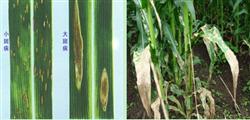
Northern corn leaf blight and southern corn leaf blight mainly damage the leaves, and sometimes also infect the leaf sheaths and husks; southern corn leaf blight, in addition to damaging the above parts, can also damage the ear. In many regions these two diseases are collectively called "corn leaf blight."
1. Symptom identification: The typical symptom of northern corn leaf blight is that small lesions rapidly expand into large elongated spindle-shaped spots, with severe ones reaching 10-30 cm in length; sometimes several lesions join together to form irregular large spots. The lesions are initially water-soaked, quickly turn grayish-green, and finally become brown necrotic spots. When the air is humid, black mold-like growth, namely the pathogen's conidiophores and conidia, can appear on the lesions.
The symptom characteristic of southern corn leaf blight is that the lesions are small, generally not more than 1 cm in length, with the width confined between two leaf veins, nearly elliptical, and the lesion margins are darker in color, being reddish-brown. In addition, the number of lesions is generally relatively large. The pathogens of both northern corn leaf blight and southern corn leaf blight overwinter as conidia attached to diseased plant residues, or as mycelium latent in diseased residual tissues. The following year the spores germinate and cause primary infection. After infection, the plants produce large numbers of conidia, which spread by wind and rain and cause secondary infection.
2. Factors affecting disease occurrence: The germination of pathogen spores, invasion, and spore formation and spread all require certain climatic conditions, among which temperature and humidity are the main ones. The optimum temperature for the formation, germination and invasion of northern corn leaf blight pathogen spores is 20-25°C, and that of southern corn leaf blight pathogen is slightly higher than that of northern corn leaf blight, with an optimum temperature of 20-32°C. Therefore, southern corn leaf blight is more severe in summer corn planting areas, while northern corn leaf blight is more severe in spring corn areas.
3. Control methods: The epidemic of the disease is determined by three factors: first, large-scale planting of susceptible varieties; second, the existence of large amounts of pathogens; third, the presence of environmental conditions suitable for disease development. Therefore, disease control should start from these three aspects.
(1) Select disease-resistant varieties: This is the fundamental approach to controlling northern and southern corn leaf blight. Different varieties have obvious differences in resistance to the diseases.
(2) Eliminate overwintering inoculum sources and reduce the amount of inoculum in the early stage of disease occurrence: Crop rotation can reduce the amount of inoculum. In addition, after corn harvest, diseased residues in the field should be thoroughly removed and the soil should be deeply plowed in time; this is an important measure to reduce primary infection sources.
(3) Chemical control: For northern corn leaf blight, spray 40% edifenphos or 70% mancozeb wettable powder at 600 times dilution.
For southern corn leaf blight, spray 50% carbendazim wettable powder at 500 times dilution, or 70% thiophanate-methyl wettable powder at 500 times dilution. Application should begin at the early stage of disease occurrence so that the development of the disease can be effectively controlled; if necessary, spray again about 7 days later for control.