How to prevent and control soybean bud blight? A full breakdown of practical methods
Soybean bud blight, also called bud rot, is one of the soybean viral diseases with a relatively large impact on yield. Depending on the stage at which it occurs, losses range from 25% to 100%. In 1962 in China, similar symptoms appeared on foreign varieties introduced in Shandong Province, and afterward the disease occurred in Hebei, Beijing, Liaoning, Jilin, Heilongjiang and other places...
Soybean bud blight, also called bud rot, is one of the soybean viral diseases with a relatively large impact on yield. Depending on the stage at which it occurs, losses range from 25% to 100%. In 1962 in China, similar symptoms appeared on foreign varieties introduced in Shandong Province, and afterward the disease occurred in Hebei, Beijing, Liaoning, Jilin, Heilongjiang and other places. This disease is caused by multiple viruses, but no formal identification of the pathogen has been carried out, so the pathogens of bud blight may differ from place to place.
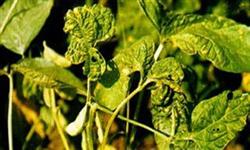
1. Disease symptoms: Most soybean varieties show no obvious symptoms at the seedling stage, with only a few rusty small spots appearing on the leaves. Typical symptoms appear after flowering: the top of the diseased plant's stem bends downward into a hook shape, the young leaves, buds and stem at the tip turn brown, dry up and fall off easily, and the pith also turns brown. The necrotic part spreads downward. Brown necrotic stripes appear on the petioles, and irregular brown necrotic spots also appear on the pods, while the leaves often show no symptoms. Plants that become diseased early are noticeably stunted, set no pods or very few pods, and some have no branching. In addition, diseased plants may also show stunting, clusters of flower buds and compound leaves emerging, swollen nodes, and abnormally dark green leaves; by harvest time they often stay green and remain dark green, mostly without setting seed, and the seeds of diseased plants appear normal and do not produce brown-speckled seeds.
2. Occurrence patterns: The occurrence and epidemic of bud blight vary greatly between years and between regions, but the epidemic patterns are not yet fully understood. Surveys show that soybeans near perennial forage grasses and wasteland become diseased early and severely, while soybean fields adjacent to non-host crops such as corn become diseased late and mildly. Soybeans can be infected at any growth stage, with a high infection rate before flowering. Most soybean viral diseases can be spread by virus-carrying seeds, and once seeds carry the virus it is difficult to eliminate it; treating seeds with chemicals or using the shoot-tip culture method is ineffective.
3. Control methods:
(1) Strengthen quarantine to prevent the disease from spreading and expanding.
(2) Breed disease-resistant varieties and use virus-free seeds.
(3) Controlling aphids can reduce the damage from viral diseases. At the seedling stage, spray 2.5% deltamethrin emulsifiable concentrate at 5000 times dilution; alternatively, use 2 kg of 3% carbofuran powder per mu mixed with 15 kg of moist fine soil and broadcast it along the soybean rows at sowing time, which also controls white grubs and cyst nematodes.
(4) Intercropping soybeans with tall crops, sowing early at the appropriate time, and clearing weeds in the field can all reduce the occurrence of the disease.