-
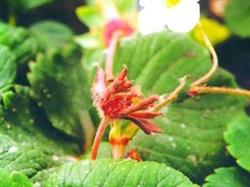
Symptom Identification and Integrated Control Methods for Strawberry Bud Blight
Strawberry bud blight is a soilborne fungal disease with a worldwide distribution. It is strongly saprophytic in soil and is an important root disease of many crops. In addition to strawberry, it also affects more than 160 species of cultivated and wild plants, including cotton, soybean and vegetables. On strawberry, it mainly damages buds, new shoots, stipules and the bases of leaf petioles, causing seedling-stage damping-off...
-
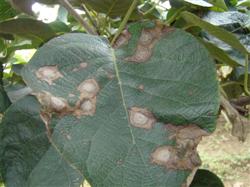
How to identify and control kiwifruit branch blight
Kiwifruit branch blight, also called water-loss branch blight, is a physiological disease caused by climatic factors. It refers to the sudden wilting and death of fruiting canes or vegetative canes when the fruit tree has not suffered artificial fertilizer damage or pesticide damage, nor pathological root rot, branch rot, canker, and other such conditions. 1. Disease symptoms...
-
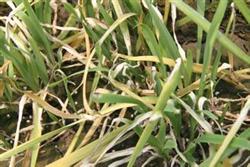
Control Methods and Technical Key Points for Chive Blight
Treat seeds with 25% metalaxyl at 0.3% of the seed weight. After disease onset, use 64% oxadixyl mancozeb at 600 times dilution, 69% dimethomorph mancozeb at 600 to 800 times dilution, 50% iprodione at 500 times dilution, and 77% copper hydroxide at 600 to 700 times dilution, applied alternately, once every 5 to 7 days, for 2 to 3 treatments.
-
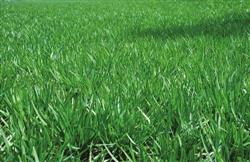
Safety management points for the control of leek blight in greenhouse and shed conditions
Damage symptoms: It mainly affects the false stem and bulb, and the leaves, roots, and flower stalks can also be affected. Lesions on affected leaves mostly begin on the lower part, initially producing dark green water-soaked lesions, and when they later spread to about 1/2 of the leaf, the whole leaf turns yellow, droops, and becomes soft-rotted. When humid, grayish-white mold develops on the diseased part. When the false stem is affected...
-
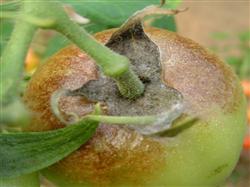
Identification and Control Methods of Tomato Late Blight
Tomato late blight, which vegetable growers call persimmon blight, is a devastating disease of tomatoes. - Symptom identification: The disease can occur in both seedlings and adult plants. When seedlings are affected, dark green water-soaked lesions appear on the leaves and quickly spread to the petioles and stems, making them thinner and dark brown, causing the whole plant to wilt or break at the stem. When humidity is high, the diseased area...
-
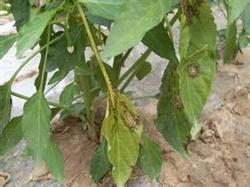
Detailed Guide to Identifying and Controlling Phytophthora Blight in Peppers
Control methods: 1. Phytophthora blight in peppers mainly damages leaves, fruits and stems, and is most likely to occur at the base of the stem. When the disease occurs at the seedling stage, infection mostly starts from the base of the stem; the affected part shows water-soaked soft rot, the lesion is dark green, and the plant lodges above the diseased part. Control methods: 1. Practice crop rotation and deep plowing to improve the soil, and combine...
-
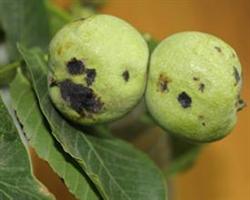
How to prevent and control walnut bacterial blight? These methods are very practical
The pathogen of walnut bacterial blight generally overwinters in twigs or buds, and in the following spring exudes bacterial fluid that spreads via wind and rain, mainly damaging young fruit, leaves and tender twigs. Management methods: 1. Overwintering management. After leaf fall, apply Husu Jiangjun to the trunk and branches to hinder the pathogen from multiplying on the tree body, providing insulation, disinfection and frost protection. At the same time, spray Husu...
-
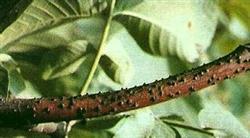
Integrated Control Methods and Technical Key Points for Walnut Branch Blight
Walnut branch blight is caused by fungal infection and mainly damages branches and trunks. It occurs in all regions, with a general diseased plant rate of 20-30%, and in severe cases the diseased plant rate reaches over 80%, causing massive branch dieback and directly affecting tree growth as well as walnut yield and quality. Therefore, timely control is necessary to curb the disease and promote tree...
-
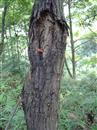
What are the damage symptoms of chestnut blight?
Damage symptoms of chestnut blight: The pathogen produces discolored lesions on smooth bark, round or irregular in shape; on rough bark, the lesion margins are indistinct, and as they continue to expand, the bark splits longitudinally. In spring, many orange-yellow warty stromata can be seen on the affected bark. After autumn, the stromata turn orange-red to dark red...
-
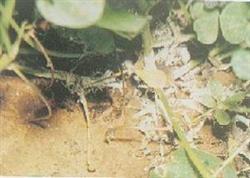
What are the comprehensive control measures for peanut southern blight?
Peanut southern blight is a soil-borne fungal disease that occurs from the pod swelling stage to the maturity stage of peanuts. After the peanut roots, pods and stem bases are infected, they initially show brown soft rot, with white silky mycelium at the root-stem area above ground (hence the name southern blight), along with rapeseed-like sclerotia; the stems and leaves turn yellow and gradually die, and the peanut pods...
条件筛选