-
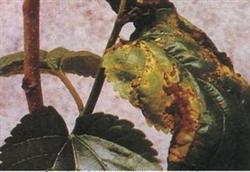
What are the control methods for mulberry rotten head blight?
Mulberry bacterial blight, commonly known as "rotten head blight", is one of the serious mulberry diseases. Symptoms: (1) black withered buds - affected buds and leaves lose their luster at the early stage of disease and die rapidly; (2) new shoot stem rot. The stem base of new shoots shows black rot, with part of the phloem and xylem necrotic; (3) rotten head. After the terminal shoot buds and leaves are infected, the growing point...
-
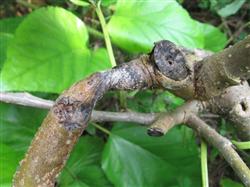
How to prevent and control mulberry shoot-blight disease? Simply remove the mulberry flowers and fruits
Mulberry shoot-blight disease, also known as branch-blight disease or white mulberry fruit disease. Shoot-blight is a mulberry disease that has become widespread in recent years. It is caused by the pathogen Sclerotinia minor, which infects new shoots through the fruit stalk, causing the base of the new shoot to rot and break off. Its characteristic is that mulberry trees bearing female flowers, or both male and female flowers on the same tree, are prone to this disease, with a shoot-blight rate of...
-
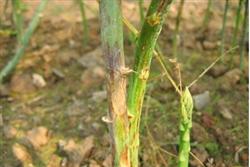
How to prevent and control asparagus stem blight? Detailed explanation of control methods
How to prevent and control asparagus stem blight? Please introduce the methods. Asparagus stem blight can be prevented and controlled by referring to the following methods: 1. When planting asparagus, choose flat, fertile sandy loam land that can be irrigated and drained. 2. Promptly and thoroughly handle diseased plant residues. Overwintering stalks must all be dealt with before "Spring Equinox"; diseased branches should be removed promptly;...
-
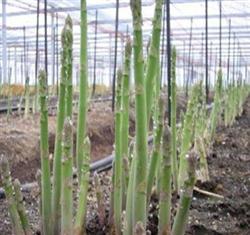
What are the methods for identifying asparagus stem blight?
How do you identify asparagus stem blight? How do you prevent and control it? Please explain. Asparagus stem blight is an important disease harming asparagus and occurs commonly in various regions. 1. Pathogen: Asparagus stem blight is a disease caused by infection with fungi of the genus Phoma in the subphylum Deuteromycotina. 2. Symptom identification: When plants develop the disease, it damages the stems and...
-
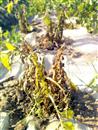
How can potato late blight be controlled effectively?
How can potato late blight be controlled effectively? Please provide guidance. Effective control of potato late blight can be carried out in the following ways: 1. Agricultural control: ① Select disease-resistant varieties, plant at a reasonable density, use balanced fertilization, increase potassium fertilizer, and enhance plant resistance. ② Strictly select disease-free seed potatoes to eliminate sources of disease infection. ③ High...
-
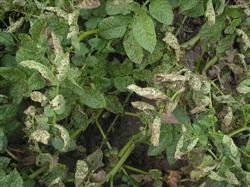
How to Treat Potato Early Blight? A Detailed Guide to Prevention and Control Methods
How to treat potato early blight? Please explain the methods. Early blight control is mainly based on chemical fungicides, with protective fungicides applied as sprays. Before the disease appears, 75% mancozeb water-dispersible granules can be used at 180-200 grams per mu, sprayed once every 7-10 days for 3-4 consecutive applications. Antaisheng (propineb) and similar fungicides can also be used...
-
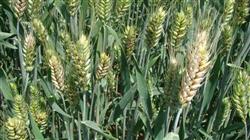
What causes wheat head blight?
What causes wheat head blight? A detailed introduction to wheat head blight: 1. The impact of wheat head blight on quality and its types. Important wheat regions in China have all suffered from head blight. In recent years, the frequency of head blight in northern Henan has been high, greatly affecting wheat quality. The issue of head blight toxins. ...
-
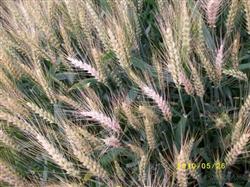
What are the control methods for wheat head blight (Fusarium head blight)?
What methods are used to control wheat head blight? Please provide guidance. Due to the continuous increase in the degree of mechanized wheat harvesting, large amounts of straw returned to the field, and wheat chaff blown and scattered across the field, the occurrence of wheat head blight has gradually worsened. Head blight is one of the major diseases harming wheat; the affected wheat heads turn pink, which is why it is called head blight...
-
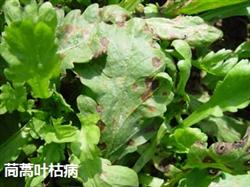
What is garland chrysanthemum leaf blight? A complete guide to this disease
What is garland chrysanthemum leaf blight? An introduction to its causes and control methods. Garland chrysanthemum leaf blight infects only the leaves; the lesions are round or irregular, light gray in the center with brown edges. When humidity is high, a black mist-like growth appears on both the upper and lower surfaces. In the later stages, the lesions merge into patches, causing the leaves to wither and die. The main cause of garland chrysanthemum leaf blight is...
-
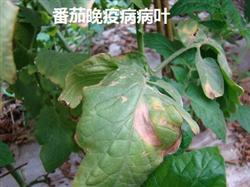
Why does late blight occur in autumn tomatoes? Tomato cultivation techniques explained
Why does late blight occur in autumn tomatoes? Please introduce the causes of the disease and control methods. Autumn tomato late blight is a low-temperature, high-humidity disease. Infection can occur successfully when relative air humidity is above 80%. The optimum humidity for pathogen development is 20-22°C during the day and above 10°C at night. Low temperatures, overcast and rainy weather, and high humidity, with heavy fog in the morning and at night...
条件筛选