What are the control methods for downy blight (Phytophthora rot) in cabbage and cauliflower?
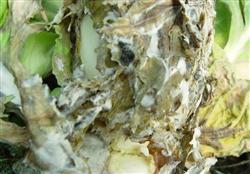
This spring has seen a lot of low-temperature and rainy weather, making cabbage prone to sclerotinia rot, so check and treat it early. When sclerotinia rot occurs at the cabbage seedling stage, water-soaked light brown lesions appear on the leaves with indistinct edges, and the diseased tissue soft-rots, causing damping-off. When plants are affected during the head-forming stage, water-soaked sunken lesions form on the leaves near the ground and on the root crown, initially appearing...
 You can spray with 25% metalaxyl-propamocarb at 500 times dilution, or 64% oxadixyl-mancozeb at 500 times dilution, or 58% metalaxyl-mancozeb at 500 times dilution, or 72.2% propamocarb hydrochloride at 800 times dilution. When air humidity is high, bacterial diseases may also occur, so treatment should target both disease types. You can spray with 25% metalaxyl-propamocarb at 500 times dilution + 20% bismerthiazol at 600 times dilution, or 64% oxadixyl-mancozeb at 500 times dilution + 2% kasugamycin at 500 times dilution, spraying once every 5-7 days. This provides dual-direction control of downy mildew, downy blight (Phytophthora rot), bacterial black rot and bacterial soft rot in cabbage and cauliflower.