Integrated Control Measures for Gummy Stem Blight of Hami Melon in Rainy Regions
I. Bacterial Leaf Spot Symptoms: In the early stage, water-soaked lesions appear near the veins on the underside of leaves; the lesions expand rapidly and merge into one another, with a yellow halo at the edges. Control method: In the early stage of the disease, spray the foliage 2-3 times with 77% Duoning at 500 times dilution or 3% zhongshengmycin at 800 times dilution, once every 4-5 days. II. Gummy Stem Blight Symptoms...
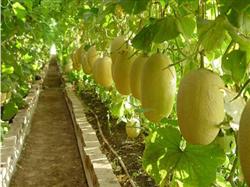
Gummy stem blight mainly damages the stems and vines of Hami melon, and also damages leaves, petioles and fruits. When stems and vines are infected, water-soaked lesions mostly form at the stem nodes, then turn into irregular necrotic spots ranging from grayish white to light reddish brown. When petioles are infected, they show water-soaked rot, and later produce many small black dots, causing the plants to shrivel and lodge. When leaves are infected, brown "V"-shaped lesions form at the leaf margins, with a pale yellow outer edge and indistinct concentric rings on them. When fruits are affected, water-soaked lesions appear in the early stage, with a brown center; after drying out they crack in a star shape and finally rot. A cross-section of the diseased stem shows that the vascular bundles do not discolor, which distinguishes it from Fusarium wilt.
Agricultural control: Choose plots with high terrain and good drainage, and adopt cultivation with deep furrows and high ridges (ridge height 30 cm) covered with plastic film to reduce soil moisture. Rotate with non-cucurbit crops for 2-3 years, and advocate paddy-upland rotation to reduce the pathogen population. Apply decomposed organic fertilizer as a base fertilizer, and increase the application of phosphorus and potassium fertilizers and micronutrient fertilizers. Use trellis cultivation and appropriately reduce planting density, with a plant spacing of 60 cm and 1100-1200 plants per mu. Hami melon prefers a dry climate, and using drip irrigation under film can reduce humidity inside the greenhouse. Watering should be done on sunny days, in small amounts and multiple times, and the greenhouse should be ventilated promptly after watering. Prune, remove side shoots, thin fruits and top the plants in a timely manner to maintain ventilation and light penetration in the greenhouse.
Chemical control: Generally, spray with 70% mancozeb wettable powder or 75% chlorothalonil wettable powder at 600-800 times dilution, once every 7 days. In the early stage of the disease, spray with 25% prochloraz emulsifiable concentrate at 1000 times dilution, once every 5-7 days. Alternatively, on a sunny morning, mix 50% carbendazim wettable powder or 70% thiophanate-methyl wettable powder with 25% prochloraz emulsifiable concentrate into a paste, and apply it to the diseased parts and the wounds left by pruning and removing side shoots.