How to identify peanut leaf blight? A simple method anyone can understand at a glance
Peanut web blotch, also known as cloud-pattern blotch or net-blotch, was first discovered in the United States in the mid-1940s. In the late 1970s, China's Liaoning Province reported the occurrence and damage of this disease for the first time. In recent years, the disease has been fairly common in production areas in northern China, with relatively severe damage, generally reducing yield by about 20%, and in severe cases reducing yield by 4...
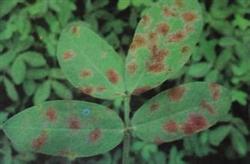 There are many causes of peanut leaf blight, but they fall into two major categories: infectious diseases and non-infectious diseases. Generally speaking, the latter is difficult to control with pesticides. I have personally seen farmers using carbendazim to control peanut plants after sunscald, which shows that failing to correctly identify the type of peanut leaf blight will inevitably affect the correct application of control techniques. Based on field observations, here is a brief description of the common symptoms of peanut leaf blight.
1 Non-infectious leaf blight
1) Sunscald. It often occurs in summer, when the temperature suddenly rises above 35°C and dry, hot wind weather forms. It occurs over a large range and a wide area, often throughout an entire region. For example, this phenomenon occurred in Linshu County in 1999. Observe a single peanut plant: leaves exposed to direct sunlight dry up, while leaves not exposed to direct sunlight appear normal.
2) Waste gas pollution. It often occurs after rainfall, in fields around chemical plants (especially phosphate fertilizer plants), while fields far from chemical plants appear normal. Observe a single peanut plant: aboveground parts such as old leaves, young leaves and stems all show drying. It is generally caused by acid rain containing sulfur and fluorine.
3) Pesticide phytotoxicity. It often occurs after pesticide application, caused by crop sensitivity to a certain pesticide during the control of peanut diseases and insect pests and by excessively high spray concentration. In addition, phytotoxicity caused by herbicides when a sprayer used for herbicides has not been cleaned thoroughly is also fairly common. Affected fields are limited to those where the pesticide was used, while other fields where pesticides were used appear normal.
2 Infectious leaf blight
Compared with non-infectious leaf blight, it is not completed in a short time, but forms gradually.
1) Leaf spot disease. It includes brown spot and black spot. Their common feature is that both occur in the middle and late stages of peanut growth. They mainly damage leaves; the lower old leaves become diseased first and gradually spread upward. At first, the spots are brown and needle-head sized, and gradually expand into round spots.
Under humid conditions, the spots produce grayish-brown mold, and the spots merge into irregular large patches, causing leaf drop.
2) Peanut web blotch. This is a disease whose occurrence and damage have worsened in recent years. There are two types, namely the web blotch type and the net-blotch type. Their common feature is that under conditions of relatively high humidity, small awl-shaped black spots first appear on the leaves, then expand into dark brown irregular spots with net-like edges, causing large numbers of peanut leaves to drop in the middle and late stages.
In addition, peanut root rot, stem rot, southern blight, bacterial wilt and other diseases also cause peanut leaf blight, often killing the entire plant. However, these diseases generally occur relatively mildly.