Detailed Explanation of Management Techniques for Young Pecan Trees
1. Timely and appropriate topdressing: topdress 3-4 times a year. In the first half of the year, topdress once each in late March, mid-May, and early July, using 0.5 kg of compound fertilizer each time, applied in a ring trench at the outer edge of the canopy. In the second half of the year, apply a base fertilizer once between November and December, using 10 kg of decomposed chicken manure or 2 kg of rapeseed cake, applied in strip-shaped holes 30 cm below the soil surface. Applying...
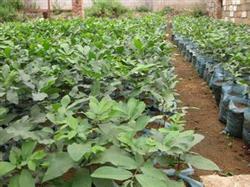
1. Timely and appropriate topdressing: topdress 3-4 times a year. In the first half of the year, topdress once each in late March, mid-May, and early July, using 0.5 kg of compound fertilizer each time, applied in a ring trench at the outer edge of the canopy. In the second half of the year, apply a base fertilizer once between November and December, using 10 kg of decomposed chicken manure or 2 kg of rapeseed cake, applied in strip-shaped holes 30 cm below the soil surface. Sufficient topdressing is beneficial to tree growth, expands the canopy, and helps form a high-yielding tree shape earlier.
2. Timely disease and pest control: although pecan trees are resistant to diseases and pests, once diseases or pests appear on young pecan trees, pesticides should be sprayed promptly for control. For insect pests, fenpropathrin 2500 times dilution can be used; for diseases, thiophanate-methyl 1000 times dilution can be used.
3. Prevent weed infestation, and do not use glyphosate for weed control: young pecan orchards have many weeds, and manual weeding should be done at least twice a year. The first time can be after the plum rain season ends, that is, in early July, to manually cut down spring weeds; the second time is once in mid-to-late September before autumn weeds grow vigorously. Never use glyphosate for weed control in young pecan orchards, as this will harm the tree body and affect pecan growth.
4. Grafting new varieties: seedling pecan trees planted in our city do not begin bearing fruit until after eight or nine years of growth, so production starts relatively late. Therefore, grafting the large-fruited thin-shelled variety of Changhua pecan can be tried to bring fruiting earlier and improve fruit quality.
5. Scientific shaping and pruning: for cultivation as a fruit tree, according to the growth habits of pecan trees, a central-leader form or an open-center tiered form can be adopted, with tree height controlled at 5-6 m. The pruning period for pecan can be from after leaf fall in winter to before bud break in spring. Remove weak slender branches, overly dense branches, diseased and pest-infested branches, etc.