Spring-Sown Corn Planting Management Measures and Key Points
1. Suit measures to local conditions and select improved varieties. In plain and hilly areas, promote Yedan 13 and Xiyu No. 3, paired with Huayu No. 4, Zhongdan 32, Chenghai No. 1, and Yuanzheng 808; for interplanting in cotton fields, select the short-stalked, short-growth-period Yedan 22, Yedan 51, and 9362; in suburban areas, focus on fresh-eating types, and plant Zhongnuo 1...
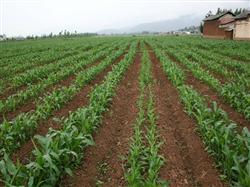 Spring corn is at the jointing and booting stage, and is about to enter the tasseling, flowering, and grain-filling stages. The booting stage of corn is the period when corn moves from vegetative growth into the stage where vegetative growth and reproductive growth proceed together, and its demand for water and fertilizer is also relatively high. If the supply of fertilizer and water is insufficient, it will affect ear differentiation. At the same time, insufficient water can also cause "neck-binding drought," delaying tasseling and pollination, reducing the seed-setting rate, and affecting yield. The management measures are as follows:
1. Strengthen fertilizer and water management. Apply a heavy topdressing of fertilizer at the large trumpet stage, generally 25 kg of urea per mu. In case of drought, irrigate promptly, but during continuous rainy weather, pay attention to drainage and waterlogging prevention, and do not allow water to accumulate in the cornfield.
2. Timely control pests and diseases. Focus on the control of northern corn leaf blight and southern corn leaf blight, Asian corn borer, and corn armyworm. For the control of northern corn leaf blight and southern corn leaf blight, spray thiophanate-methyl or chlorothalonil at the early stage of the disease. For the control of Asian corn borer and corn armyworm, use pesticides such as methamidophos and phoxim to reduce the damage caused by pests and diseases.
3. Strengthen hoeing and control of weeds in cornfields. Paraquat can be used at 125-150 grams per mu, mixed with 50 kg of water, for directed spraying, or manual pulling can be used to remove weeds, so as to reduce the harm of weeds to corn.