-
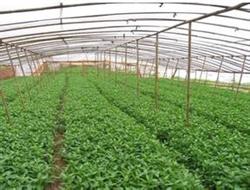
What are the winter management measures for water spinach in greenhouses?
1. Deeply plow the land, apply sufficient base fertilizer, and keep the soil merely moist. Adjust the temperature according to the needs of the plants. Spraying New High Lipid Film can effectively prevent aboveground moisture from evaporating and seedling moisture from transpiring, shorten the seedling recovery period, and help the plants quickly adapt to the new environment and grow healthily. 2. Water reasonably, fertilize in a timely manner, cultivate and weed,...
-
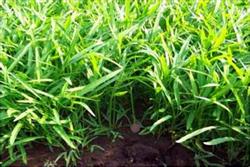
Key Cultivation and Management Techniques for High-Quality, High-Yield Water Spinach
I. Sowing. Both direct sowing in the open field and seedling transplanting are acceptable; the sowing period is generally mid-to-late April. For direct sowing in the field, drilling or hill sowing may be used, with a row spacing of 30-35 cm and a hill spacing of 15-20 cm, sowing 3-4 seeds per hill; water immediately after sowing, and seedlings will emerge in about 7 days. Dense sowing may also be used, and once the seedlings reach 17-20 cm in height...
-
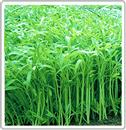
Detailed Explanation of the Key Technical Points for Water Spinach Cultivation and Management
Water spinach, also known as bamboo-leaf vegetable, tongxin cai, weng cai, tong cai or vine vegetable, is a fast-growing leafy green vegetable that has been actively introduced in various regions in recent years. Its main management techniques are as follows: (1) Raising seedlings. The seed coat of water spinach is relatively thin and not hard, and it absorbs water rather quickly, so sowing dry seeds and allowing them to germinate is sufficient. Soaking seeds to promote germination and then sowing. ...
-
Management Measures for Spring Planting and Cultivation of Chestnut
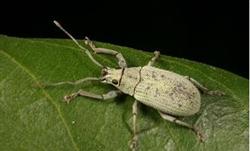
The chestnut weevil, also known as the chestnut snout beetle, lays eggs in August, and the eggs hatch into larvae in September. The larvae bore into and feed on chestnut fruits, causing the damaged fruits to be filled with insect droppings, affecting their edibility and making them unsuitable for seed. Fruit damage generally ranges from 20% to 40%, and can reach 90% in severe cases. The control method is to spray insecticide on chestnut trees. Use 50% fenitrothion at 800 times dilution...
-
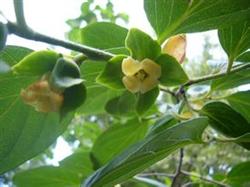
Careful Management During the Persimmon Blooming Period Is Key to Good Fruit Quality
In order to produce persimmon fruits that are uniform in size, neat in shape, full at the top, and good in commercial appearance, measures such as artificial supplementary pollination, flower and fruit thinning, releasing bees during the blooming period, and girdling can be used for regulation. For artificial pollination, varieties such as Jiro and Fuyu have low parthenocarpic fruit-setting ability; through pollination, a certain number of seeds are formed,...
-
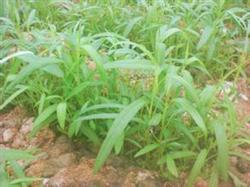
Key Management Techniques for Water Spinach in Solar Greenhouses
After water spinach seedlings are transplanted or direct-seeded seedlings emerge, intertillage and soil loosening should be carried out several times to raise soil temperature, promote root development, and thoroughly remove field weeds. Water spinach requires relatively little water during the seedling stage, so irrigation can be done moderately. After harvesting begins, the soil should be kept moist. After the first harvest, apply 15 kg of urea or diammonium phosphate per mu...
-
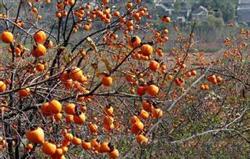
What are the key technical points for summer management of a persimmon orchard?
Summer management of a persimmon orchard should pay attention to the following matters: 1. Fruit thinning For astringent persimmons, from mid-May to early June, and for sweet persimmons, from early June to early July, after the physiological fruit drop ends, select and keep healthy young fruits free of pests and diseases at a ratio of 20 to 25 leaves per fruit. The ones to remove are deformed fruits, pest- and disease-damaged fruits, and fruits set on branches less than 15...
-
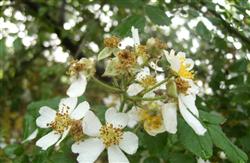
Key Management Techniques for Persimmon Trees Before and After Flowering
Management of persimmon trees before and after flowering. Persimmon trees are light-loving crops, and in dense planting cultivation, attention should be paid to solving ventilation and light penetration, which is the main measure for high-yield management. Persimmon trees bear fruit from axillary buds, so thinning out vigorous growing branches and strengthening nutrient accumulation in branches and trunks are very important. Before flowering, emphasis should be placed on applying amino acids to the trunk to promote flower bud differentiation, overcome alternate...
-
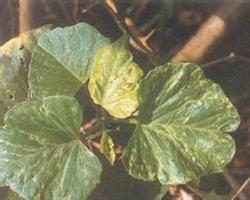
Key Technical Points and Recommendations for Mid-Season Field Management of Sweet Potato
In recent years, farmers have often reported that after the sweet potato seedlings they cultivated were transplanted into the field, the leaves turned yellow and wrinkled, and the plants grew very slowly, or in rural colloquial terms, "died without growing." Such potato vines basically produce no yield later on. According to investigation, the main cause is severe occurrence of sweet potato virus disease. Sweet potato virus disease is a common disease of sweet potato...
-
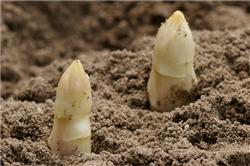
Asparagus sowing methods and post-sowing management key points
I. Sowing time: To make use of the longest growing season, sow as early as possible in spring. The sowing time should be after the frost period, when the soil temperature reaches 18-20°C. The higher the soil temperature, even up to 32°C, the faster the sprouting. Sowing too late in the growing season can result in smaller mother plants. Therefore, if sowing is done too late in the growing season, then as much as...
条件筛选