A Complete Guide to Key Lychee Spring Management Techniques
1. Thoroughly clean the orchard. First, cut down overly dense weeds and shrubs around and inside the orchard and clear them outside the orchard; second, thin out overly dense branches and diseased or pest-infested branches inside and outside the tree canopy and clear them outside the orchard; third, spray the whole orchard once with trichlorfon 600x solution + Yunsheng 600x solution to eliminate overwintering insect eggs and pathogens. Orchards with a water source should be irrigated as much as possible...
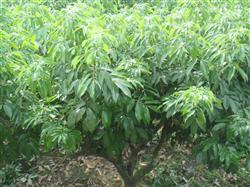
1. Thoroughly clean the orchard. First, cut down overly dense weeds and shrubs around and inside the orchard and clear them outside the orchard; second, thin out overly dense branches and diseased or pest-infested branches inside and outside the tree canopy and clear them outside the orchard; third, spray the whole orchard once with trichlorfon 600x solution + Yunsheng 600x solution to eliminate overwintering insect eggs and pathogens. Orchards with a water source should be irrigated as much as possible.
2. For mid-to-early maturing varieties such as Heiye, Feizixiao and Baila that have not yet shown white buds, spray Quanshuguo twice in a timely manner to promote early flower branch development (spray once at an interval of one week). For the Sanyuehong variety, spray Jinyunda-120 now to strengthen the flowers, because Jinyunda-120 can mobilize the nutrients stored in the trunk and branches to concentrate toward the reproductive organs (flower buds), which is beneficial to the growth of flower buds. For late-maturing varieties such as Nuomici, Guiwei and Huaizhi, spray Quanshuguo once to promote complete flower bud morphological differentiation, which is beneficial for producing strong flower branches.
3. When 70 to 80 percent of the trees in the orchard have produced flower branches, spray the whole orchard once with Jinyunda-120 + Pingman + trichlorfon or Anzhi to strengthen the flower buds and prevent lychee erinose mite and lychee stink bug damage to the flower panicles. When lychee stink bugs occur in relatively large numbers, carry out the second and third spraying in a timely manner, and you can use Anzhi + trichlorfon and Gaoxiao Miebaike alternately for spraying. If rainy or foggy weather occurs during the flower bud stage, spray with 80% Yunsheng 600x solution 2 to 3 times to prevent downy blight and anthracnose. Mainly spray the flower panicles and spring shoots.
4. During flowering, orchards with the conditions can release bees for pollination, and in general no pesticides, especially insecticides, should be used; however, when foggy and rainy weather occurs, 80% Yunsheng can be sprayed 1 to 2 times to prevent the spread of anthracnose and downy blight.
5. When more than 70 percent of the flowers in the orchard have fallen, fruit retention should begin. Spray Quanshuguo 1500x solution 1 to 2 times to prevent the first physiological fruit drop. If labor is available, gently shake the branches to dislodge the remaining flowers on the fruit clusters. At this time, special attention should be paid to preventing stink bug nymphs from damaging young fruit. One of the best times to control stink bugs is the 1st and 2nd instar nymphs; from the 3rd instar onward, chemical control becomes very difficult. Using Anzhi + Lesiben and Gaoxiao Miebaike + trichlorfon alternately for spraying can achieve the control effect, and the cost is also very low. Focus on spraying the fruit-bearing branches. At the same time, the control of anthracnose and downy blight must not be neglected. Yunsheng 80% can be used for prevention and Anke for treatment.