What are the key management techniques for spring radishes in May?
Planting spring radishes in early spring is a path to wealth with low investment, a short cycle, and high returns. It not only supplements the supply of vegetables during the off-season and increases the variety of produce, but also provides a good preceding crop for the following crop. Its main cultivation techniques are introduced as follows: 1. Choose excellent varieties. Generally, choose those with high yield, good quality...
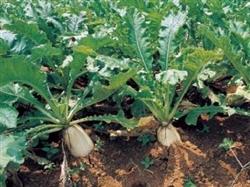 I. Management
For spring radishes, field water accumulation should be carefully drained to reduce soil moisture. During the growth of spring radishes, watering is generally not needed; water only appropriately when the soil in the furrow turns white. During the fleshy root enlargement stage, radishes have a relatively high water requirement, so irrigation can be done according to soil moisture conditions, preferably by drip irrigation. If furrow irrigation is used, it should be done at noon on a sunny day, filling half the furrow with water and draining it completely 2 hours after irrigation. To ensure sufficient nutrients in the middle and late stages of radish growth, topdress fertilizer in 2 applications. The first is about 30 days after sowing, when most radishes have exposed shoulders, applying 25 kg of compound fertilizer per mu diluted into a 0.5% liquid fertilizer to irrigate the roots. The second is about 45 days after sowing, with the same amount as the first. If soil moisture is relatively high, topdressing can be applied in holes, placed 10 cm away from the radish roots.
II. Pest and disease control
The main pests are aphids and cabbage caterpillars, which can be controlled by alternately spraying imidacloprid, insecticidal agents, and dichlorvos on the undersides of the leaves. The main diseases are downy mildew and black rot, which can be prevented by measures such as crop rotation and enhanced ventilation. If chemical agents are used to prevent diseases, for downy mildew, solutions such as copper hydroxide and mancozeb can be sprayed alternately; for black rot, solutions such as agricultural streptomycin and copper-based formulations can be used to irrigate the roots.