What are the key points of post-harvest management techniques for plum trees
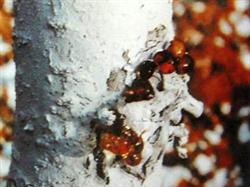
Gummosis is a common non-infectious disease of plum and other stone fruit trees, with an incidence rate as high as 76%-95%. Affected trees show yellowing leaves and weak branches, declining tree vigor, severe fruit drop, and may even die entirely. The bark at the affected area cracks and swells, exuding a soft, transparent gummy sap that oxidizes and congeals into a reddish-brown gelatinous substance. Caused by gummosis...
 Agricultural experts remind that after harvesting plums, more attention should be paid to orchard management to restore tree vigor and prepare for increased yields the following year.
1. Timely fertilization to restore tree vigor. The purpose is to restore tree vigor, enhance leaf function, and prevent abnormal leaf drop after harvest that could lead to decline in tree vigor. Post-harvest fertilizer should be applied around early July before or after harvest, which coincides with the beginning of flower bud morphological differentiation. Generally, for plum trees with heavy fruit loads, apply 0.5 kg of compound fertilizer per tree 10-15 days before harvest. For trees with light fruit loads, application can be delayed to within one week after harvest. For orchards that did not apply post-harvest fertilizer before harvest, apply approximately 0.5 kg of compound fertilizer per tree within one week after harvest, in a ring-shaped trench dug along the drip line of the canopy, to restore tree vigor and create conditions for increased yields the following year.
2. Cultivation and weeding, loosening soil and earthing up. Manual weeding is preferred; for chemical weeding, avoid using systemic conductive non-selective herbicides such as glyphosate. Generally, carry out one cultivation and weeding after harvest, keeping grass between rows. Along with cultivation and weeding, perform a shallow soil loosening to a depth of 4-5 cm, and earth up 5-7 cm.
3. Do a good job of drainage and irrigation. Plum trees are shallow-rooted fruit trees. They are susceptible to both waterlogging and drought, and are sensitive to water. The period from July to September after harvest often brings high temperatures and drought or typhoons and heavy rain. Therefore, during the rainy season, attention should be paid to digging trenches for drainage; during high temperature and drought, cover with grass in time to prevent drought or irrigate.
4. Carry out pest and disease control well. First, do a good job of post-harvest pruning and orchard cleaning, pruning out pest and disease branches, overly dense branches, and cutting back water sprouts. Pay attention to the control of the third generation of mulberry white scale (Pseudaulacaspis pentagona) in mid-to-late July. You can use 40% Lorsban emulsifiable concentrate or 40% Supracide emulsifiable concentrate at 800-10000 times dilution for spraying.