Detailed Explanation of Early Spring Management Techniques for Pear Trees
1. Dig planting holes or planting trenches. ① For pear orchards with colored varieties spaced more than 3 m apart, planting holes can be dug; centering on the planting hole, dig a circular or square planting pit 1 m deep and 1 m wide, placing the topsoil and subsoil separately on either side of the hole. ② For pear orchards with spacing below 2 m, planting trenches must be dug, with a trench depth of 1 m, ...
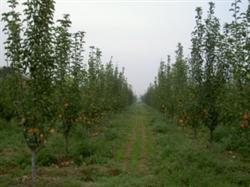 "Rationally distributing the tree's stored nutrients and reducing useless consumption is one of the important techniques for promoting normal tree growth and producing high-quality fruit. During this period, measures such as bud removal and flower bud thinning can reduce useless consumption by the tree, and this is a fairly important stage in early spring management of pear trees." Wu Sijiang, an agronomist at the Agricultural Technology Center of Jin'e Town, Longchang County, introduced early spring management techniques to pear growers.
He said that after the spring buds sprout, they should be removed once they grow to 2-5 mm. The earlier the buds are removed, the better, continuing until the flowering stage. If delayed, although the occurrence of water sprouts can be reduced, more stored nutrients are lost, and the tree vigor is easily weakened. After large branches are pruned in winter, water sprouts or useless branches and leaves often tend to form, and these should also be removed promptly at this time. Flower buds can be thinned from the time the scales fall off until before flowering, but it is best to thin them when the buds are exposed. When thinning buds, use your fingers to press the buds from top to bottom so that the pedicel breaks. At the same time, care should be taken to protect the young leaves growing from the inflorescence. When thinning buds, generally retain one inflorescence per about 20 cm, using the fruit to control upper growth; when thinning buds that sprout later, once the inflorescence extends, the secondary inflorescences should be promptly removed and normal flowers retained. When pollination conditions are good and some flowers have completed fertilization and can meet high-yield requirements, lime sulfur mixture can be sprayed in conjunction with pest and disease control to kill the stigmas of late flowers, thereby achieving flower thinning.