Key Technical Points for Plum Cultivation and Management in Greenhouses
In order to explore early-fruiting and early-high-yield techniques for cultivating plums in greenhouses, our station conducted experimental research from 1997 to 2000. The greenhouse was covered in the winter of the second year after planting, and in 2000, a 4-fen plot greenhouse produced 1000 kg of plums. The output value was over 10,000 yuan, and the maturity period was about 60 days earlier than open-field cultivation. Through the experiments, we summarized the techniques for cultivating plums in greenhouses...
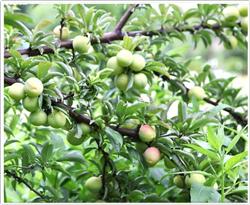
In order to explore early-fruiting and early-high-yield techniques for cultivating plums in greenhouses, our station conducted experimental research from 1997 to 2000. The greenhouse was covered in the winter of the second year after planting, and in 2000, a 4-fen plot greenhouse produced 1000 kg of plums. The output value was over 10,000 yuan, and the maturity period was about 60 days earlier than open-field cultivation. Through the experiments, we summarized the key technical points for plum cultivation and management in greenhouses. A brief introduction follows for reference.
1. Methods for raising temperature after covering the greenhouse.
After covering the greenhouse, raise the temperature gradually in three steps.
Step one: during the day, "pull one out of every two," that is, pull up 1/3 of the straw curtains, and maintain this for about 1 week.
Step two: during the day, "pull two out of every one," that is, pull up 2/3 of the straw curtains, for 1 week.
Step three: during the day, pull up all the straw curtains; if the temperature is too high, ventilate to cool it down.
2. Irrigate thoroughly 20-30 days before mulching, and cover the tree disk with plastic film to increase ground temperature, reduce water evaporation, and lower humidity inside the greenhouse.
3. In early June and early July, spray paclobutrazol once at 800×10-6 and 1000×10-6 concentrations respectively, which can effectively control the canopy, inhibit growth, and promote flower formation. Recommended reading: Raising geckos in idle houses is an easy path to wealth
4. Greenhouse cultivation lacks pollination vectors such as bees and wind. In addition to arranging pollinizer trees, placing bees during the flowering period also gives better results. In addition, artificial pollination can also be used, and spraying 0.3% monopotassium phosphate during the young fruit stage; all of the above measures can significantly increase the fruit-setting rate.
5. For 2-3-year-old plum trees, carry out girdling 1 month after flowering to inhibit the growth of young vigorous trees, increase the proportion of short branches, promote flower formation, and also advance the fruit maturity period. The girdling width should preferably be slightly less than 1/10 of the trunk circumference; if the girdle is too wide, the tree vigor will be weakened too much, and if it is too narrow, the goal will not be achieved.
6. Pest and disease control. The main diseases of greenhouse plums are shot hole disease and scab, and 1000-fold Taokongjiasa can be sprayed twice along with foliar fertilizer; the main pests are scale insects and aphids, and 1000-fold Supusha can be sprayed 1-2 times after sprouting.