Key Technical Points for High-Yield Fertilization Management of Pear Trees
About one month before pear fruit ripens, the growth rate accelerates, which is called the fruit expansion stage. Topdressing at this time can improve photosynthetic efficiency, promote nutrient accumulation, and benefit fruit expansion and flower bud differentiation. This topdressing can both increase the yield of the current year and lay the foundation for fruiting in the following year. 525 Shandong Fruit Network The fertilization period is generally at the fruit...
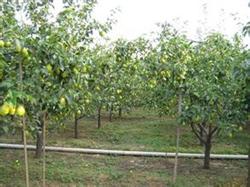
About one month before pear fruit ripens, the growth rate accelerates, which is called the fruit expansion stage. Topdressing at this time can improve photosynthetic efficiency, promote nutrient accumulation, and benefit fruit expansion and flower bud differentiation. This topdressing can both increase the yield of the current year and lay the foundation for fruiting in the following year. 525 Shandong Fruit Network
The fertilization period is generally in the middle and late stages of fruit development. This period is the main stage for fruit weight increase. Taking Huanghua pear as an example, the suitable period for applying expansion fertilizer is in mid-to-late July; for late-maturing varieties such as Yaqing pear, it should be applied once more in mid-August; while for early-maturing varieties such as Xiziyuan pear, it should preferably be applied in early July. 525 Shandong Fruit Network
Fertilizer types The increase in fruit volume mainly depends on the accumulation from leaf photosynthesis, while the transport and transformation of organic nutrients accumulated by photosynthesis to the fruit depend on mineral elements - nitrogen, phosphorus, potassium, and others. If nitrogen is deficient, leaf photosynthesis is hindered; if phosphorus is lacking, fruit growth is affected; potassium can promote the transport of sugar, increase the sugar content of the fruit, and improve fruit quality and disease resistance. Therefore, the types of expansion fertilizer are mainly nitrogen, phosphorus, and potassium. 525 Shandong Fruit Network
Fertilization amount The determination of the fertilization amount for pear trees is affected by many factors. It should be determined not only according to the content of nutrient elements in the soil that can be absorbed and utilized by pear trees, but also according to factors such as tree age, tree vigor, fruit load, and the amount of fertilizer applied in the previous year. Fertilizing according to local conditions and individual trees is necessary to achieve good results. According to fruit growers' experience, for a pear tree with a per-tree yield of 50 kg, the expansion fertilizer should be applied with 1.5 kg of ammonium bicarbonate, 1 kg of superphosphate, and 0.5 kg of potassium sulfate. 525 Shandong Fruit Network
Fertilization method Generally, pit hole application is used. For adult pear trees, the pits should be dug at the canopy projection area, at 2/3 of the distance from the trunk. 3 to 4 pits can be dug, with a depth of 20 cm and a width of about 20 cm. When applying expansion fertilizer, close attention must be paid to soil moisture; in case of drought, irrigation is needed. In mid-to-late July, apply immediately after rainfall, and after application quickly cover with soil and firm it to prevent nitrogen volatilization and reduced fertilizer efficiency. 525 Shandong Fruit Network
Supplementary application of biogas fertilizer as restorative fertilizer The restorative fertilizer is generally applied after pear harvest, and its purpose is to strengthen the vigor of pear trees and ensure the yield of pear trees in the following year. Apply 20 kg of biogas slurry per tree, add 50 g of urea, and broadcast it at the roots. The restorative fertilizer must be strictly controlled, and the amount applied should be well managed to avoid triggering the growth of autumn shoots and autumn buds.