-
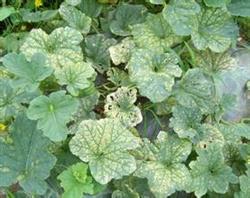
Pollution-free Disease and Pest Control Techniques for Muskmelon
The main pests harming melons include root maggots, mole crickets, cutworms, white grubs, leafminers, pumpkin beetles, aphids, and red spider mites, among others. (1) Root maggot: also called root maggot or melon maggot. It is the larva of the seed corn maggot. The body is about 5 mm long and maggot-shaped, damaging the young roots, young shoots, and tender stems of melon seedlings. Common control methods are as follows: ...
-
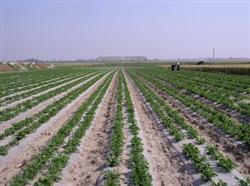
What are the high-yield cultivation techniques for summer peanuts?
Summer peanuts mostly refer to peanuts grown after wheat harvest. Their growth period is 30-40 days shorter than that of spring peanuts, and each growth stage is correspondingly shortened. Growth is fast in the early and middle stages, and temperatures are low in the late stage, which is unfavorable for pod development. Therefore, the following measures should be taken. (1) Select early-maturing, high-yield varieties. (2) Sow early by seizing the time. In spring, every day counts; in summer, every hour counts...
-
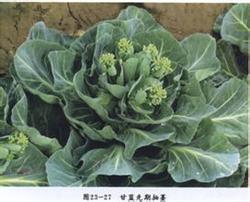
Detailed Explanation of Cabbage Seedling-Raising Techniques for Summer-Autumn and Overwintering
Late-sown overwintering cabbage cultivation is generally raised as seedlings in September and planted in November on late-crop plots such as cotton, rice, orchards or sweet potato land. It is harvested in mid-April. The income is generally 3000 yuan per mu. The returns are relatively good, and it is welcomed by many growers. From sowing to harvest, it passes through a long period of low temperature, and premature bolting is likely to occur...
-
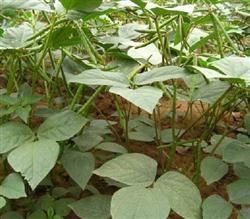
Detailed Explanation of Key Techniques for High-Yield Mung Bean Cultivation
Mung bean is a crop with high protein, low fat, moderate starch, and both medicinal and edible uses. It is an ideal health food for people and has high economic value. The most notable features of mung bean cultivation are a long suitable sowing period, a short growth period, drought tolerance, poor-soil tolerance, strong adaptability, a wide cultivation range, and nitrogen-fixing ability. It is a good preceding crop, but continuous cropping is not advisable...
-
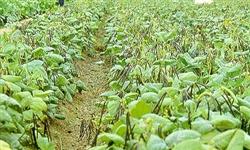
Detailed Explanation of Key Mung Bean Cultivation Techniques and Methods
(1) Apply sufficient base fertilizer. Although mung bean rhizobia have nitrogen-fixing ability, applying additional farmyard manure and phosphorus and potassium fertilizers has a clear yield-increasing effect. Farmyard manure can be applied all at once before sowing, then plowed into the soil. If there is not enough time to apply base fertilizer, then during the early growth stage, that is, at branching and early flowering, a certain amount of nitrogen and phosphorus fertilizer should be applied to enhance...
-

Golden Jade Leaf (Portulacaria afra) watering techniques for all four seasons, helping you easily get through its two dormant periods
Have you heard of "Golden Jade Leaf"? This plant looks like purslane, and its other name is purslane tree. Golden Jade Leaf belongs to the Portulacaceae family and is also a succulent. When it comes to succulents, the trickiest problem for everyone is watering...
-
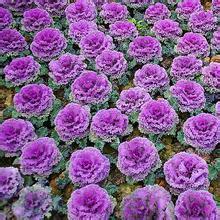
Spring Cultivation Techniques and Management Key Points for Purple Cabbage
Purple cabbage has good cold tolerance, firm heads, brilliant color, strong adaptability, high yield, and good quality. It is suitable for open-field and protected cultivation, with a yield of 2500-3000 kg per mu. 1. Variety selection: Choose varieties with strong winter hardiness and early maturity for spring sowing, such as Purple Cabbage No. 1, Zaohong, and Hongmu. 2. Sowing and seedling raising: Nanjing...
-
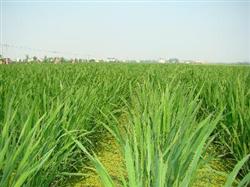
Occurrence Characteristics of Pests and Diseases in High-Mountain Water Bamboo and Integrated Control Techniques
The key points of off-season cultivation techniques for double-cropping water bamboo at low altitudes are introduced as follows: 1. Selection of improved varieties. The Zhejiang Yidianhong water bamboo (a single-cropping type) is selected. 2. Land preparation and seedling raising. Select a field sheltered from wind and facing the sun, with convenient irrigation and drainage and loose, fertile soil, as the seedling bed. In early November, sun-dry the seedlings until they are 60-70% dry, 1...
-
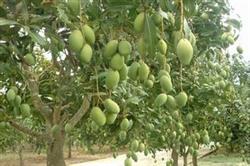
Detailed Explanation of Key Points for Irrigation and Fertilization Techniques for Mango Trees
For every 1000 kg of fresh mangoes produced, N: 1.74 kg, P2O5: 0.23 kg, K2O: 2.0 kg are required. The greatest demand is for potassium, followed by nitrogen and phosphorus. In production, nitrogen, phosphorus, and potassium fertilizers are generally applied at a ratio of N:P2O5:K2O = 1:0.5:0.5 to 1, but for mangoes of different tree ages, in different regions, and at different yield levels...
-
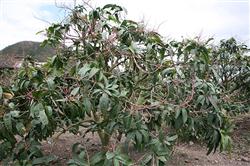
Detailed Explanation of Key Points of Mango Tree Cultivation and Management Techniques
I. Orchard Construction and Field Planting 1. Building Ridges in the Orchard and Keeping Ring Ditches Clear According to the terrain and slope of the orchard, ridges should be built properly to prevent waterlogging from rain and soil erosion. Dredge the drainage channels; the field ditches and ring ditches throughout the orchard must be kept clear. Achieve automatic drainage when it rains and no standing water after rain, so as to achieve the purpose of artificial water control; at the same time, the footpaths and tractor roads in the orchard must also be kept clear to facilitate management work.
条件筛选