Detailed Explanation of Key Mung Bean Cultivation Techniques and Methods
(1) Apply sufficient base fertilizer. Although mung bean rhizobia have nitrogen-fixing ability, applying additional farmyard manure and phosphorus and potassium fertilizers has a clear yield-increasing effect. Farmyard manure can be applied all at once before sowing, then plowed into the soil. If there is not enough time to apply base fertilizer, then during the early growth stage, that is, at branching and early flowering, a certain amount of nitrogen and phosphorus fertilizer should be applied to enhance...
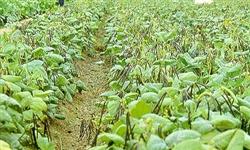
(1) Apply sufficient base fertilizer
Although mung bean rhizobia have nitrogen-fixing ability, applying additional farmyard manure and phosphorus and potassium fertilizers has a clear yield-increasing effect. Farmyard manure can be applied all at once before sowing, then plowed into the soil. If there is not enough time to apply base fertilizer, then during the early growth stage, that is, at branching and early flowering, a certain amount of nitrogen and phosphorus fertilizer should be applied to enhance the nitrogen-fixing ability of rhizobia and increase flower bud differentiation.
(2) Sowing
Mung beans can be sown in spring and summer. Spring sowing is from late April to early and mid-May. Summer sowing is in mid-to-late June, and early sowing should be pursued. Mung bean seeds contain 10% small hard seeds, which are difficult to germinate after sowing and easily cause missing plants and broken rows, so they should be screened out before sowing. The sowing rate is generally 1.5-2 kg per mu, and the sowing depth is preferably 3-5 cm.
(3) Field management
1. Thinning and final singling of seedlings. When mung bean seedlings reach the two-leaf-one-heart stage, clustered seedlings should be removed. Final singling is done at the 4-leaf stage, with a plant spacing of 13-16 cm, a row spacing of about 40 cm for sole cropping, and 10,000-12,500 plants per mu is preferable.
2. Intertillage and weeding. From emergence to flowering and canopy closure, mung beans are generally hoed at least four times, with intertillage depth going from shallow to deep and then shallow again.
3. Irrigation and drainage. The flowering and pod-setting stage of mung bean is the peak period of fertilizer and water demand. If drought occurs during this period, timely watering is needed to keep the soil moist. However, the flowering and pod-setting stage often falls in the rainy season, causing excessive vegetative growth of stems and leaves, resulting in a large number of flower and pod drops, or death from waterlogging. Timely drainage is needed to ensure normal growth of mung beans.
4. Intercropping and relay intercropping. Mung bean has strong shade tolerance and is often intercropped, relay intercropped, or mixed with tall crops in production. Several forms are introduced:
Spring maize relay intercropped with mung bean. Spring maize is planted in wide and narrow rows, with wide rows 1 m, narrow rows 50 cm, plant spacing 33 cm, and about 2,650 plants per mu; or wide rows 1.6 m, narrow rows 50 cm, plant spacing 26 cm, and about 3,000 plants per mu. After maize pollination, 3-4 rows of early-maturing mung bean with a short growth period, small plants, and concentrated pod setting are relay intercropped in the wide rows. The row ratio is 2:4, or 1:1, that is, a single row of spring maize intercropped with a single row of mung bean. This pattern makes mung bean too shaded and affects yield.
Summer maize intercropped with mung bean. Summer maize is planted in wide and narrow rows, and two rows of early-maturing mung bean are relay intercropped in the wide rows. If maize is relay intercropped in wheat fields and mung bean is also to be intercropped, then mung bean can be sown immediately after wheat harvest after stubble clearing; if maize is planted after wheat harvest, mung bean and maize can be sown simultaneously in a 2:2 pattern.
Mung bean mixed with summer sesame. After wheat harvest, mung bean and sesame are sown mixed at the same time. After sesame harvest, mung bean is at the full flowering and pod-setting stage, with sufficient light, which is favorable for mung bean growth and full grains.
Mung bean intercropped with foxtail millet. For intercropping mung bean with summer foxtail millet, after wheat harvest, sow at the same time as foxtail millet in a 4:2 or 2:2 pattern.
In short, when mung bean is intercropped or relay intercropped with maize, foxtail millet, sweet potato, etc., generally the row spacing is adjusted for intercropping mung bean without affecting the density of the main crop. If mung bean is used as green manure, plowing it under at full flowering gives the best effect. If mung bean is relay intercropped in wheat rows, then after wheat harvest, mung bean becomes a sole crop.
(4) Pest and disease control
The main target is the mung bean weevil. Adults lay eggs on bean grains or tender pods, and after the larvae hatch, they bore into the bean grains to cause damage.
Control methods: before storage, treat bean grains at a high temperature of 50°C to kill insects; fumigate with 1.5 kg of sodium cyanide per 1,000 cubic meters for 48 hours at a temperature above 20°C, with an insect-killing efficiency of 100%, and it does not affect the germination rate; store sealed with low oxygen; for small amounts, soak in boiling water for 20 minutes, remove and dry in the sun, then place in a jar, where they can be stored for a very long time without affecting the germination rate.