Detailed Explanation of Cabbage Seedling-Raising Techniques for Summer-Autumn and Overwintering
Late-sown overwintering cabbage cultivation is generally raised as seedlings in September and planted in November on late-crop plots such as cotton, rice, orchards or sweet potato land. It is harvested in mid-April. The income is generally 3000 yuan per mu. The returns are relatively good, and it is welcomed by many growers. From sowing to harvest, it passes through a long period of low temperature, and premature bolting is likely to occur...
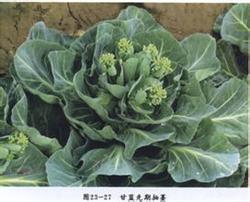 Summer-autumn and overwintering cabbage is a cultivation method commonly used in both northern and southern China. This cultivation method mainly fills the gap in vegetables during the summer and winter off-seasons and adjusts the variety of produce on the market. Moreover, farmers can obtain relatively good economic returns from growing it. However, with this seasonal cultivation, seedlings are raised during the hot, rainy season, so the seedling survival rate is low and raising seedlings is very difficult. Farmers often say that you have money to buy seed but no money to buy seedlings, and farming time is delayed. Therefore, paying attention to seedling raising and mastering seedling-raising techniques are the prerequisites for ensuring successful cultivation.
I. Selection of Seedling-Raising Site
For summer seedling raising, choose fertile garden soil where cruciferous crops have not been grown in the previous two years, with high, dry terrain, good ventilation and coolness, and good drainage, sandy loam soil.
II. Land Preparation and Bed Making
The seedling-raising site must be deeply plowed several times, with a small amount of decomposed organic fertilizer added, so that the soil is fine and loose. Make north-south beds, 1.0-1.2 m wide and 10-15 cm high, with a 15-20 cm drainage ditch between each bed. The bed surface must be level; tread lightly with flat-soled shoes to avoid cracks when watering lightly, which would affect emergence. Generally, 35-40 sq m of seedling beds per mu is sufficient.
III. Variety Selection:
1. Summer cabbage: choose medium-early maturing varieties with a short growing period of about 60 days that are heat-tolerant, moisture-tolerant, and resistant to pests and diseases. Domestic ones include Xiaguang and Qiangxia; imported ones include Shilongzhixia, Xiaqiulüwang, Tieqiu No. 2 and Tieqiu No. 3, etc.
2. Autumn, autumn-winter and overwintering cabbage: mostly early, medium and late maturing. Domestic ones include Jingfeng, Zhonggan 11, Zhonggan 15, Shuangmei, Shuangyue, Shuangqiang and Wanfeng, etc. Imported ones include HBZ-079, HBZ-080, Aizhen, Qiangli Dongbao and Wosite, etc.
IV. Soaking the Beds
After the bed is leveled and trodden firm, water lightly; it must not be too much. If there is too much water, the seeds are prone to rotting, and under high temperature and high humidity it easily causes seedling-stage diseases; if there is too little water, summer temperatures are high, evaporation is great, the soil is dry, and the seeds cannot absorb water and swell, affecting emergence. Therefore, water until the 10 cm soil layer reaches saturation.
V. Sowing Techniques:
1. After the water seeps in, spread a layer of sieved fine soil on the bed surface. You may also use medicated soil mixed with chemicals (thiram, dexon at 8-10 grams per sq m) to seal the cracks. This is also called turning soil, to prevent mud from sticking to the seeds and affecting germination. Generally, the seeding rate is 35-40 grams per mu; summer cultivation has a high density, so the amount used is relatively larger.
2. Sowing: there are two methods, broadcasting and dibbling. Dibbling is used for sowing in nutritional pots. To sow evenly, use broadcasting with fine sand or millet added, sowing in 2-3 batches to ensure evenness. For dibbling, place 2-3 seeds per nutritional pot. Dibbling saves seed but costs labor; broadcasting costs labor but saves seed.
3. Covering with soil: cover with soil immediately after sowing, using sieved fine soil or medicated soil. The soil cover should not be too thick or too thin. If too thick, the seeds are prone to suffocating; if too thin, the seedlings easily emerge with the seed coat attached, and the cotyledons cannot open to receive light and absorb nutrients, forming leggy or diseased seedlings. Therefore, a soil cover thickness of 0.8-1 cm is sufficient. You may also cover with soil in two rounds, covering 2/3 the first time and 1/3 the last time, to prevent emergence with the seed coat attached. The covering soil must be sieved fine soil or medicated soil to prevent seedling-stage diseases.
VI. Shading and Shed Construction
Cabbage seeds are small and low in nutrients and have poor adaptability to adverse environmental conditions. Therefore, after sowing, a shading shed should be built immediately to protect against rain and sun. Generally, use local materials; covering the bed surface with straw or broken straw mats is also acceptable. Another option is to build a 1 m high shading shed, leaving a 30-40 cm ventilation channel below, and covering the top with old plastic sheeting or straw mats, etc. Remove the covering three days after sowing; removing it later will form leggy seedlings, which is not conducive to cultivating strong seedlings. If the weather is hot three days later, the mats can be put back appropriately, from 11 a.m. to 4 p.m., and shade netting can also be used to protect against the sun. In short, during the hot, rainy summer season, careful management is needed to cultivate strong seedlings.
VII. Seedling Transplanting
For summer seedling raising by broadcasting, transplant the seedlings at the two-leaf-one-heart stage, selecting large, strong seedlings and discarding diseased, weak and insect-damaged seedlings. Generally, the seedling spacing is 10 cm. Water immediately after transplanting and provide shade to promote recovery. Generally, the seedlings can be planted out when they grow to 4-5 true leaves, with a seedling age of 25-30 days. Summer-autumn cabbage seedling raising and farming activities are all arranged on cloudy days or in the afternoon and evening, to avoid severe water loss of the seedlings due to hot weather, which would affect the seedling survival rate.
VIII. Seedling-Stage Pests and Diseases
(1) Physiological Diseases
1. Root rot: the root system becomes rusty, with no root hairs, caused by excessive soil moisture and lack of oxygen in the roots, and the aboveground part wilts.
2. Root breakage: underground pests bite and break the root system, causing the seedlings to wilt.
(2) Diseases
1. Damping-off: the disease occurs at the seedling stage. Water-soaked lesions appear at the base of the seedling stem, then the diseased part turns brown and constricts into a thread-like shape. When the disease is severe, the seedlings topple over before the cotyledons have wilted. Under high temperature and high humidity, a layer of white cottony mycelium grows on the surface of the host's diseased residues and on the bed surface nearby.
2. Rhizoctonia rot: both newly emerged seedlings and large seedlings can be affected, mostly occurring in the middle and late stages of seedling raising. Oval dark brown lesions appear at the base of the seedling stem. In the early stage, diseased seedlings wilt during the day and recover at night. The lesions gradually sink and, after expanding, encircle the stem, and finally the diseased part shrinks and dries up, and the whole plant dies. Pale brown spider-web-like mold is often present at the diseased part but not obvious, and there is also a not very obvious white cottony substance, which can distinguish it from damping-off.
Control Methods:
1. Choose a seedling bed site that is high and dry with good drainage and irrigation, with fully decomposed fertilizer, and loose and level soil.
2. Strengthen seedbed management. Provide ventilation and light promptly during seedling raising, water appropriately, and do not flood-irrigate. For spring seedling raising, protect against cold and preserve warmth to improve the disease resistance of the seedlings.
3. Bed soil treatment: treat with chemicals.
1) Formalin: 2-3 weeks before sowing, loosen the bed soil. For every square chi of bed soil, use 50 ml of formalin mixed with 4-8 jin of water (the amount of water depends on the dryness and humidity of the soil) and pour it onto the bed soil. Cover with nylon sacks for 4-5 days, remove the cover, loosen the soil, and sow only after the chemical solution has volatilized.
2) Pentachloronitrobenzene: mix 70% pentachloronitrobenzene and 50% thiram in equal amounts evenly, using 8-10 grams per sq m; you may also use 50% carbendazim or 50% thiophanate alone, with the same dosage as above. Mix the above medicated soil with 20-30 jin of semi-dry fine soil. Before sowing, spread 1/3 of the medicated soil on the bed surface as a base layer, and cover 2/3 over the seeds as the covering soil.
4. Chemical control: when a small number of diseased seedlings are found in the seedbed, pull them out promptly and spray with carbendazim and chlorothalonil at 1000 times dilution. If humidity is high, add chlorothalonil or plant ash to make dry fine soil. First, it disinfects; second, it reduces humidity.
5. Plant growth regulators or 5406 seedling fertilizer can improve the disease resistance of seedlings and inhibit the occurrence of diseases.
6. Pests:
The main pest is aphids; use pyrethroid insecticides and imidacloprid in combination with disease control.
For cabbage caterpillars and diamondback moths, use biological control or Bacillus thuringiensis at 1000 times dilution, or HD-1 insecticide at 800-1200 times dilution, dichlorvos, 50% cartap wettable powder at 500 times dilution; blacklight traps may also be used to lure and kill them. Control must be carried out by spraying at the second-instar larval stage for an obvious effect.