What are the high-yield cultivation techniques for summer peanuts?
Summer peanuts mostly refer to peanuts grown after wheat harvest. Their growth period is 30-40 days shorter than that of spring peanuts, and each growth stage is correspondingly shortened. Growth is fast in the early and middle stages, and temperatures are low in the late stage, which is unfavorable for pod development. Therefore, the following measures should be taken. (1) Select early-maturing, high-yield varieties. (2) Sow early by seizing the time. In spring, every day counts; in summer, every hour counts...
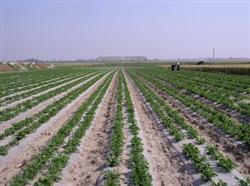
Summer peanuts mostly refer to peanuts grown after wheat harvest. Their growth period is 30-40 days shorter than that of spring peanuts, and each growth stage is correspondingly shortened. Growth is fast in the early and middle stages, and temperatures are low in the late stage, which is unfavorable for pod development. Therefore, the following measures should be taken.
(1) Select early-maturing, high-yield varieties.
(2) Sow early by seizing the time. In spring, every day counts; in summer, every hour counts. Early sowing is the key to determining whether summer peanuts can achieve high yields.
(3) Apply nitrogen and phosphorus fertilizer early and increase the amount. The growth period of summer peanuts is short. At sowing time, in addition to increasing organic fertilizer, apply 10-15 kg of nitrogen fertilizer and 25-50 kg of phosphorus fertilizer per mu.
(4) Ensure full stands and increase density. Summer peanut plants are short and small, so it is necessary to make full use of soil fertility and light energy and give play to the yield-increasing role of the population. The planting density should be increased by 10% compared with spring sowing.
(5) Cultivate and weed in time. Summer peanuts are in a season of high temperatures and abundant rain, which makes weeds likely to grow, and the soil easily becomes compacted after rain. Therefore, it is necessary to cultivate and weed in time to loosen the soil.