-
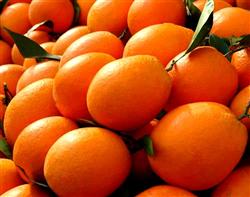
Detailed Explanation of Key Points for Navel Orange Harvesting and Fresh-Keeping Techniques
It is now the navel orange harvest season. If fruit growers only focus on early orchard management while neglecting post-harvest fruit handling and fresh-keeping storage techniques, the fruit will deteriorate and rot, resulting in a bumper harvest without a bumper income. Pay attention to harvesting techniques. For navel orange fruit intended for storage after harvest, picking is generally best when 80% of the fruit surface has colored and the fruit has not yet softened...
-
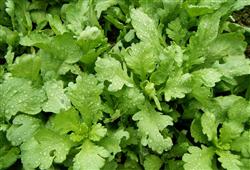
Detailed Explanation of Key Techniques for Greenhouse Cultivation of Crown Daisy in Autumn and Winter
Because crown daisy (Glebionis coronaria) has characteristics such as tolerance to low temperatures, preference for cool conditions, intolerance to strong light, and relatively low light saturation point and photosynthetic intensity, cultivating crown daisy in greenhouses during autumn and winter is not only feasible but can also be brought to market during the Spring Festival period, greatly improving economic returns. The key cultivation points are as follows: 1. Timing In northern regions, from early October...
-
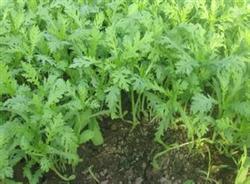
How to Grow Crown Daisy? Master the Cultivation Techniques and Management Methods in One Article
I. Site Selection and Land Preparation Crown daisy cultivation is best suited to sandy loam soil, and convenient irrigation conditions are required. After selecting the site, plow the soil and apply high-quality farmyard manure, applying more than 1000 kg per 0.1 hectare, along with 25 kg of diammonium phosphate as base fertilizer. Make flat beds 1.2-1.4 m wide and 10-20 m long, ready for sowing. II. Sowing and Seedling Raising...
-
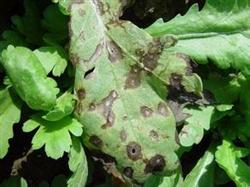
Detailed explanation of key points for greenhouse cultivation techniques of garland chrysanthemum
Garland chrysanthemum gray leaf spot is a fungal disease. Circular to nearly circular lesions form on the leaves, and semicircular or irregular lesions form on leaf margins. The lesions are 2-4 mm in diameter, grayish brown in the center with dark brown edges and broad concentric rings. Under high humidity, gray mold-like growth appears on the lesions. The pathogen mainly overwinters with diseased plant residues, and diseased plants produce...
-
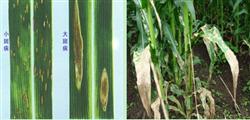
Control Techniques for Northern Corn Leaf Blight and Southern Corn Leaf Blight
Northern corn leaf blight and southern corn leaf blight mainly damage the leaves, and sometimes also infect the leaf sheaths and husks; southern corn leaf blight, in addition to damaging the above parts, can also damage the ear. In many regions these two diseases are collectively called "corn leaf blight." 1. Symptom identification: The typical symptom of northern corn leaf blight is that small lesions rapidly expand into large elongated spindle-shaped spots...
-
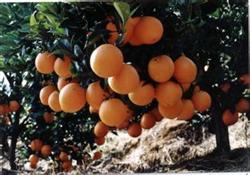
Detailed Explanation of Key Cultivation Techniques for High-Yield Navel Oranges
1. Choose dwarfing rootstocks and graft dwarfing varieties, which is beneficial for early fruiting. Generally, the large-leaf small-flower strain of trifoliate orange (Poncirus trifoliata) is selected as the dwarfing rootstock. Trifoliate orange is currently a citrus rootstock with a dwarfing effect, and it has four strains, among which the large-leaf small-flower strain has a more ideal dwarfing effect. 2. Bend the roots for shallow planting, control the main...
-
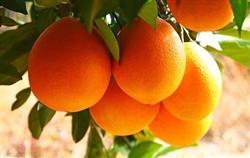
Detailed Explanation of Summer Pruning Techniques and Methods for Navel Oranges
I. Variety Selection and Orchard Establishment. Through our comparative observation of 15 navel orange strains introduced and suitable for the subtropical humid climate, we found that Newhall, Linna, Frost, Fukumoto, and New-79 displayed high and stable yields, excellent quality, and strong marketability, making them valuable for promotion and development. The selection of navel orange seedlings should ensure...
-
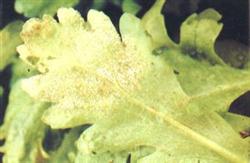
Cultivation Techniques and Pest and Disease Control Methods for Crown Daisy
I. Field Identification: Crown daisy downy mildew can occur from the seedling stage to the adult plant stage. In the early stage, chlorotic yellow spots with indistinct edges appear on the leaves, and the underside of the lesions is densely covered with a white to pale yellowish-white mold layer, and the diseased leaves wither rapidly. As the disease progresses, the upper surface of the diseased leaves in the later stage is also densely covered with a white to pale yellowish-white mold layer. In severe cases...
-
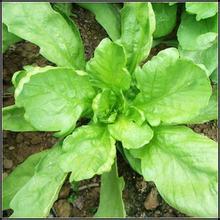
Detailed Explanation of High-Yield Cultivation Techniques for Greenhouse Grown Crown Daisy
Crown daisy (Glebionis coronaria) is an annual leafy vegetable of the Asteraceae family. Its key cultivation techniques are as follows: 1. Site selection and land preparation. The land for cultivating crown daisy is best sandy loam soil with convenient irrigation conditions. After selecting the site, plow it, apply a small amount of dried manure as base fertilizer, mix it evenly with the topsoil, and make flat beds 1.4-1.5 m wide...
-
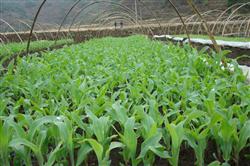
Detailed Explanation of Key Techniques for Spring Corn Seedling Cultivation
The spring corn sowing period is approaching, and in production, seedling cultivation and transplanting should be done well to promote early and steady growth of corn and achieve high and stable yields. Fertilizing the seedbed: For transplanting with nutrient pot seedlings, prepare a seedbed 1.5 m wide and 20 m long for each mu of field, apply 250 kg of decomposed organic fertilizer, 2.5 kg of compound fertilizer, and...
条件筛选