-
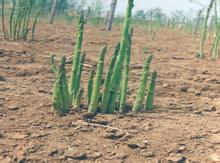
Full Analysis of Key Techniques for Spring Asparagus Seedling Cultivation
Asparagus production generally uses seedling raising followed by transplanting. Centralized seedling raising and transplanting gives a high emergence rate, can save seeds, reduce costs, facilitate centralized management, and helps with pest and disease control and the cultivation of strong seedlings; it can extend the growing period in the planting year and increase the yield in the second year; during cultivation, seedlings can be planted in a directional orientation according to the growth direction of asparagus, which facilitates ridge building, spear harvesting and management operations.
-
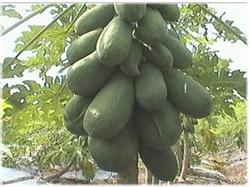
Detailed Explanation of Key Techniques for High-Yield Papaya Cultivation
Papaya (Chaenomeles sinensis) is a plant of the genus Chaenomeles in the Rosaceae family. Its fruit is rich in nutrients and has high medicinal value. The key techniques for high-yield field cultivation of papaya are described as follows: Papaya is suitable for close planting. On thin soils in mountainous and hilly areas, the plant-to-row spacing is generally 1.5-2 m x 3 m. On flat land with good fertility and water conditions, the plant-to-row spacing should be 2-3 m x ...
-
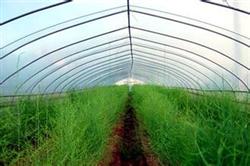
Detailed explanation of key techniques for off-season cultivation of asparagus in greenhouses
Variety selection: choose hybrid varieties with strong disease resistance and fast growth, such as 2000-3 and Champion. For sowing and raising seedlings, mainly raise seedlings from February to April. Soak seeds in a 300-fold dilution of 50% carbendazim wettable powder for 12 hours, then soak them in warm water at 30-35°C for 2-3 days, remove the seeds, cover with a wet towel for germination, and rinse the seeds with warm water twice a day...
-
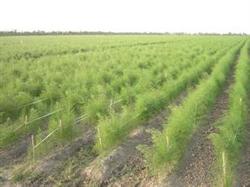
Detailed Explanation of Key Asparagus Management Techniques for Summer and Autumn
Asparagus is one of the high-efficiency cash crops, and a single planting can be harvested for more than 10 years. The annual yield per mu generally reaches 2,300 kg, and the output value per mu reaches 10,000 yuan. The key to its high-yield cultivation and management lies in the following aspects: 1. Cultivating strong seedlings. To achieve high yield of asparagus, in addition to selecting excellent varieties, it is also necessary to establish a nursery plot for...
-
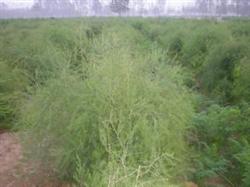
What are the main cultivation techniques for asparagus? A detailed explanation
1. Cold-frame seedling raising The cold frame should be chosen in a spot sheltered from the wind and facing the sun, with convenient irrigation, and close to the asparagus field where it will be planted out. Generally the frame surface runs east-west, with a frame length of 10-13 m, width of 1-1.5 m, and depth of 20-25 cm. The surroundings are tamped solid, forming a frame wall 25 cm thick that is higher in the north and lower in the south. The north wall is 33 cm high, the south wall 12 cm high, and the frame walls on the east and west sides connect with the north and south frame walls. Choose agricultural film 1.5-2 m wide and straw mats 2 m wide and 6-7 m long as the cold-frame covering material. At the same time, prepare wooden poles to support the covering material. The poles are about 2 m long, with both ends placed on the north and south frame walls, one placed every 60 cm. Before sowing, apply to each frame 200 kg of sieved, fully decomposed high-quality farmyard manure, 5-10 loads of human excrement and urine, 5 kg of compound fertilizer, and 0.25 kg of carbofuran or 0.25 kg of phorate (to prevent underground pests). Sowing begins in late February: after sowing, regulate the temperature inside the frame by uncovering and covering the straw mats and agricultural film. The temperature is generally controlled at around 25°C. Seedlings begin to emerge about 20 days after sowing. When the seedlings are 15-20 cm tall, remove the straw mats and film to harden the seedlings. The seedling age is 45-50 days, and they can be planted out once there are more than 3 aboveground stems.
-
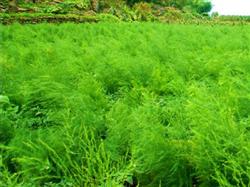
Detailed Explanation of Key Points for High-Yield Asparagus Cultivation Techniques
Asparagus seeds form a rhizome plate within two to three years after sowing. In spring, many tender spears emerge from the upper part of the rhizome plate, and these are the asparagus commonly eaten. It has a long lifespan, generally reaching 14-18 years. After sowing and planting, it can be harvested in the second year. An excellent F1 hybrid asparagus variety can yield 150 kg-2... of fresh green asparagus in the second year.
-
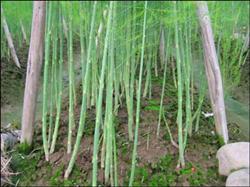
Key Points of High-Yield Cultivation and Management Techniques for Asparagus
Asparagus is one of the highly efficient economic crops; a single planting can be harvested for more than 10 years. The annual asparagus yield per mu generally reaches 2,300 kg, and the output value per mu reaches over 10,000 yuan. Fresh asparagus is rich in protein, cellulose and various trace elements, and has effects such as promoting blood circulation and relieving menstruation, as well as preventing cancer. Its high-yield cultivation and management techniques should focus on the following...
-
Detailed Explanation of Asparagus Intercropping and Relay Cropping Vegetable Cultivation Techniques
Asparagus brown spot disease is an important disease affecting asparagus quality and yield, and it occurs commonly in various regions. 1. Pathogen: Asparagus brown spot disease is caused by infection by fungi of the genus Cercospora in the Deuteromycotina. 2. Symptom identification: When plants are affected, stems, lateral branches, and cladodes all suffer damage; diseased leaves turn yellow, dry up, and fall...
-
Key Points of Xuanmu Gua (Chinese Quince) Planting Techniques and Management Methods
Base fertilizer is applied during deep plowing of the orchard in late September, mainly using barnyard manure and human excrement and urine, mixed with quick-acting N fertilizer. For young trees, apply 15-30 kg of base fertilizer per tree; for mature trees, apply 30-50 kg per tree. Topdressing: before bud break (late March to early April), apply 130 g of urea and 400 g of NPK compound fertilizer per tree in holes or furrows. Spray 0.3... once each 2 weeks before and after flowering.
-
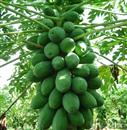
How to grow Chinese quince? Detailed explanation of cultivation techniques
Chinese quince (Pseudocydonia sinensis) is a deciduous shrub or small tree of the Rosaceae family, also known as iron-foot pear, quince tu, etc. It enjoys the reputation of "fruit of a hundred benefits" and can be used to produce more than 200 varieties across eight categories, including beverages, foods, health products, medicines, cosmetics, drinks and pigments. In recent years, Guizhou Province has gradually strengthened industrial restructuring, vigorously developing the "green...
条件筛选