Detailed Explanation of Key Points of Mango Tree Cultivation and Management Techniques
I. Orchard Construction and Field Planting 1. Building Ridges in the Orchard and Keeping Ring Ditches Clear According to the terrain and slope of the orchard, ridges should be built properly to prevent waterlogging from rain and soil erosion. Dredge the drainage channels; the field ditches and ring ditches throughout the orchard must be kept clear. Achieve automatic drainage when it rains and no standing water after rain, so as to achieve the purpose of artificial water control; at the same time, the footpaths and tractor roads in the orchard must also be kept clear to facilitate management work.
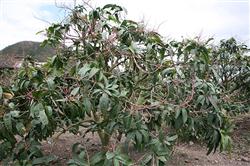
I. Orchard Construction and Field Planting
1. Building Ridges in the Orchard and Keeping Ring Ditches Clear
According to the terrain and slope of the orchard, ridges should be built properly to prevent waterlogging from rain and soil erosion. Dredge the drainage channels; the field ditches and ring ditches throughout the orchard must be kept clear. Achieve automatic drainage when it rains and no standing water after rain, so as to achieve the purpose of artificial water control; at the same time, the footpaths and tractor roads in the orchard must also be kept clear to facilitate management work.
2. Planting Density
Through many years of practice, it is considered that under the conditions of existing varieties and cultivation techniques, about 40 plants per mu is appropriate, and the specifications generally adopted are 3×5 (m) or 3.5×5 (m). Since this is close planting cultivation, measures such as yearly shaping and pruning combined with thinning out or transplanting must be used to achieve ventilation and light penetration and to facilitate management.
II. Fertilizer and Water Management
1. Fertilizer and Water Management for Young Trees
The fertilizer and water management for young trees is mainly aimed at promoting new shoot growth and rapidly expanding the canopy. On the basis of applying sufficient base fertilizer, quick-acting nitrogen fertilizer should be the main type, combined with an appropriate amount of phosphorus and potassium fertilizer, following the principle of frequent and light application. After field planting, starting from the time the plant begins to resume growth, fertilize once a month, applying 100 g of urea or 150 g of compound fertilizer per plant, applied in furrows and covered with soil. As the tree grows, the amount of fertilizer applied also increases. In dry weather, apply water-soluble fertilizer. Fertilize 7 to 8 times a year. Fertilization should be stopped from November to January of the following year to avoid stimulating new shoots and affecting overwintering.
2. Management of Fruiting Trees: Apply Heavy Post-Harvest Fertilizer to Cultivate Strong Fruiting Mother Branches
Autumn shoots are the ideal fruiting mother branches for mango trees of suitable age. Generally, two autumn shoots should be retained after harvest, with the second autumn shoot serving as the fruiting mother branch. The first shoot is required to emerge in mid-to-late August. After the new shoots grow out, select and retain three buds on each branch as extended fruiting branches, and remove the rest to reduce nutrient consumption; the second shoot emerges from mid-to-late October to early November and becomes the fruiting mother branch. Therefore, after fruit harvest, in order to rapidly restore tree vigor and promote a large number of strong autumn shoots to become fruiting mother branches, heavy post-harvest fertilizer should be applied. The amount of fertilizer applied depends on the size of the tree. This application accounts for 50-60% of the annual fertilizer application and lays the foundation for flowering and fruiting the following year.
Mango trees are prone to excessive winter shoot growth, which consumes nutrients, weakens tree vigor, and poses a threat to the yield and quality of the coming year. To address this problem, when the last autumn shoot of the mango matures and turns green, use Flower Promoter No. 2 to prevent winter shoots from emerging; from May to June of the second year, use it once more to address the rampant growth of summer shoots, concentrate nutrient supply, transform vegetative growth into reproductive growth, promote flowering, strengthen fruit, and prevent fruit drop.
III. Tree Pruning
Pruning work is one of the key measures to ensure fast growth, early fruiting, high and stable yield, and high quality of mango.
1. Shaping and Pruning of Young Trees After planting, begin shaping when the seedling height reaches 80-100 cm. For natural round-headed canopy shaping, when the seedling height reaches 80-100 cm, pinch off the growing tip or cut back to promote branching of the trunk. In the shaping and pruning of young trees, the main tasks are to cultivate scaffold branches, increase the number of branching orders as much as possible, control water sprouts, and prune branches in inappropriate positions. Within 2-3 years after field planting, cultivate 50-60 robust but not excessive terminal branches in suitable positions to form a low-growing, well-lit round-headed canopy, laying a foundation for early fruiting.
2. Pruning of Fruiting Trees At this time, pruning is mainly short cutting and thinning.
A. Pruning Before Flower Bud Differentiation Thin out overly dense branches, shaded weak branches, diseased and pest-damaged branches, crossing, overlapping, and water sprout branches to increase canopy light penetration and promote flower bud differentiation. For plants that grow excessively vigorously and have not fruited for many years, methods such as ring peeling of the main branches, ring girdling (apply Flower Promoter No. 2 after ring girdling), wire binding, and root cutting can be used to inhibit plant growth and promote flower bud differentiation.
B. After the second physiological fruit drop (about March to April), cut off peduncles and branches that affect fruit development, and thin out deformed fruit, diseased and pest-damaged fruit, and overly small abortive fruit; for branches that have not fruited or flowered without setting fruit, short cut as appropriate to promote shoot emergence and cultivate fruiting mother branches for the following year, which can also increase canopy light penetration.
C. Pruning After Fruit Harvest This is the key pruning period. After harvest, promptly short cut the fruiting branches back to the 2nd-3rd nodes from the base of that shoot. If branches between trees cross, cut back until they no longer cross. Remove diseased and pest-damaged branches, overly dense, crossing, overlapping, and shaded weak branches in the canopy. Branches that have become exhausted after many years of fruiting and water sprouts should generally be removed, but if their position is suitable, or if the canopy is weak, they may also be short cut for renewal to rejuvenate the canopy.
Whether shaping or pruning, it must be closely combined with fertilization and pest and disease control to achieve the expected results. For wounds caused by pruning, apply a callus antiseptic film for protection, to prevent pathogen infection and promote callus tissue growth.
After the autumn fertilization and pruning work for mango trees is completed, in coordination with disinfection and sterilization, spray Tree Guardian over the whole orchard to keep warm, prevent freezing, and disinfect. In early spring, spray the trunk and branches to keep warm, helping the tree's life command system recover and awaken early.