Spring Cultivation Techniques and Management Key Points for Purple Cabbage
Purple cabbage has good cold tolerance, firm heads, brilliant color, strong adaptability, high yield, and good quality. It is suitable for open-field and protected cultivation, with a yield of 2500-3000 kg per mu. 1. Variety selection: Choose varieties with strong winter hardiness and early maturity for spring sowing, such as Purple Cabbage No. 1, Zaohong, and Hongmu. 2. Sowing and seedling raising: Nanjing...
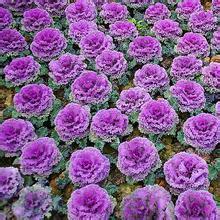
Purple cabbage has good cold tolerance, firm heads, brilliant color, strong adaptability, high yield, and good quality. It is suitable for open-field and protected cultivation, with a yield of 2500-3000 kg per mu.
1. Variety selection: Choose varieties with strong winter hardiness and early maturity for spring sowing, such as Purple Cabbage No. 1, Zaohong, and Hongmu.
2. Sowing and seedling raising: In the Nanjing area, seedlings can be raised under protected cultivation from mid-December to mid-March, with mid-December being the suitable sowing period. Each mu of field requires 16 sq m of seedbed and 50 g of seed. Before sowing, apply 20 kg of urea and 40 kg of compound fertilizer per mu, and shallow plow twice. Broadcast the seeds, water thoroughly after sowing, and cover with plastic film to raise the bed temperature and promote seed germination. Remove the film after seedlings emerge. Thin the seedlings once each at the heart-break stage and the 2-leaf stage, with a spacing of 6 cm. Pay attention to thinning the dense and keeping the sparse, thinning the weak and keeping the strong. After thinning, water and fertilize as needed according to weather conditions to promote healthy seedling growth. In the early stage of the seedbed, pay attention to ventilation during the day, keeping the shed temperature at 15-20°C, and keep the shed temperature at about 5°C at night. Before transplanting, carry out low-temperature hardening, lowering the temperature as much as possible without suffering frost damage, so as to adapt to the early spring open-field environment.
3. Land selection and transplanting: Choose a plot that is sheltered from the wind, facing the sun, high and dry, well-drained, fertile, and loose for planting. Apply 5000 kg of decomposed barnyard manure and 100 kg of compound fertilizer per mu. After fertilizing, plow the land, level it, and make beds. Cultivate with deep furrows and high beds, with a bed width of 2 m. Around February 28, when the seedlings are 15 cm tall and have 6-7 true leaves, transplant them, with both row spacing and plant spacing of 40 cm, planting 4000 plants per mu. After transplanting, water to settle the roots, and rewater promptly to ensure survival.
4. Field management: After transplanting cabbage, apart from watering to help the seedlings recover, generally do not water excessively. From 7-10 days after transplanting, keep the shed temperature at 25-27°C during the day and 13-15°C at night, and cultivate twice to promote root development. From the seedling stage to the rosette stage, water according to the principle of alternating between dry and wet soil. In the late rosette stage, early-maturing varieties should be appropriately subjected to controlled seedling treatment to curb excessive stem and leaf growth and early bolting. During the heading stage, keep the soil moist, and in conjunction with watering, apply 15 kg of urea and 10 kg of phosphorus-potassium fertilizer per mu; or spray 0.2% potassium dihydrogen phosphate solution twice, with an interval of 7-10 days. In the mid-growth period, spray ABT yield-increasing agent at 6 mg/L, Fengchansu at 2000 times dilution, Pensitbao at 5000 times dilution, etc., to regulate plant growth. Early-maturing varieties have a short heading stage and rapid head weight gain in the early stage, so topdressing should be applied early; in the mid-heading stage, topdressing may be omitted.
5. Pest and disease control: Soft rot is prone to occur during the heading stage. Remove diseased plants promptly when found, and at the early stage of the disease, spray with 72% agricultural streptomycin sulfate soluble powder at 3500 times dilution, once every 7-10 days, for 3 consecutive treatments. To control cabbage caterpillars, use 40 mL of 5% cypermethrin emulsifiable concentrate per mu added to 60 kg of water for spraying. To control diamondback moth, use 60 g of 0.5% abamectin wettable powder per mu added to 60 kg of water for spraying. To control aphids, use 15 g of 10% imidacloprid wettable powder per mu added to 60 kg of water for spraying.
6. Timely harvest: From early June to early July, harvest in batches when the heads are firm, completing the harvest within 1 month to avoid head cracking or rotting.